

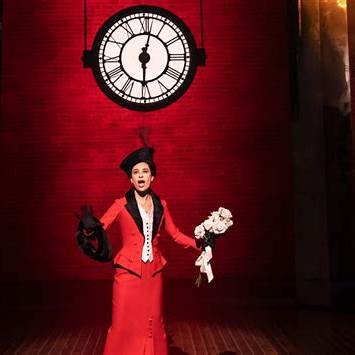
When people search “Fanny Brice portrayer” or “who played Fanny Brice,” they usually want more than a single name. They want the lineage of performers who have taken on one of musical theater’s most famous star roles: Fanny Brice in Funny Girl. The part demands everything at once—comic timing, emotional truth, and a voice that can drive brassy showstoppers and quiet heartbreak. Because the musical revolves around its leading lady, each major production tends to create its defining Fanny, and the casting history has become a story of its own.
Who was Fanny Brice?
Fanny Brice was a real performer—an American comedian, singer, and stage star who rose through vaudeville and became closely associated with the Ziegfeld Follies, Florenz Ziegfeld’s glamorous Broadway revue empire. Her persona mixed sharp humor with vulnerability and an underdog confidence that still feels modern. Funny Girl dramatizes a version of her life—especially her rapid climb and her turbulent romance with gambler Nick Arnstein—turning biography into show-business myth. That semi-biographical foundation matters because it gives the role flexibility. Each portrayer can emphasize different sides of Fanny: the clown, the romantic, the powerhouse, the outsider, the survivor.
The defining Fanny Brice portrayer: Barbra Streisand
If audiences connect one performer to Fanny Brice, they connect Barbra Streisand. Streisand originated the role on stage and later brought it to the screen, and her interpretation still shapes expectations. She played Fanny as funny without being cute, emotionally direct without turning sentimental, and vocally fearless. She helped turn Funny Girl into more than a musical—into a cultural reference point. Songs like “Don’t Rain on My Parade” became shorthand for ambition and defiance, while “My Man” delivered the show’s raw emotional payoff.
Streisand’s impact comes from more than “playing the role first.” She fused the part with her public identity. When that kind of fusion happens, later performers don’t just “play Fanny”—they enter a conversation with an iconic interpretation.
The Broadway revival era: multiple Fannys, one spotlight
Decades later, Funny Girl returned to Broadway in a high-profile revival and revived the public debate over who can play Fanny Brice today. This modern era grew especially notable because several performers carried the role in quick succession, and audiences compared interpretations in real time.
Beanie Feldstein opened the revival with her own comedic energy and screen-star presence. Her casting drew intense attention because Funny Girl demands huge vocals and because the role carries a heavy legacy. The revival also became a pop-culture talking point, as modern Broadway audiences argued about casting, vocal expectations, and the difference between a comedian’s approach and a classic “belt-the-house-down” style.
During the same run, Julie Benko stepped into the role for performances and sparked strong word-of-mouth. Many theater fans pointed to Benko as proof that an alternate or understudy can reshape a production’s public narrative. Her rise also highlighted a core truth about Funny Girl: when a performer “clicks” in the part—comedically, emotionally, vocally—audiences react fast and loudly.
Later, Lea Michele took over the role and brought another high-profile interpretation. Her casting attracted attention for theatrical reasons (strong vocals) and cultural reasons (her long-running pop-culture association with playing or wanting to play Fanny Brice). Her run also showed how Funny Girl often behaves like a weather system around its leading lady: ticket demand, press coverage, and audience chatter surge and shift with whoever plays Fanny.
The West End’s standout Fanny: Sheridan Smith
In the UK, many theatergoers associate the modern West End Funny Girl with Sheridan Smith. Smith paired warmth with sharp comedic instincts, and those qualities match the character’s central contradiction: Fanny can crack the biggest joke in the room and then break your heart moments later.
West End interpretations often rebalance humor and vocal power in ways that differ from Broadway traditions, and that contrast helps keep the role fresh. One performer may play Fanny as a scrappy comic who sings; another may play her as a singer with lethal punchlines. The strongest portrayals make both sides feel inevitable.
Other notable stage portrayals: keeping the lineage alive
Tours and international productions have kept Funny Girl alive and introduced new Fannys to new audiences. Several performers stand out in the role’s broader history:
- Mimi Hines, who took over the role in the original Broadway era after Streisand, faced intense pressure and still delivered a major run.
- Debbie Gibson, who brought a pop-star profile to the part in later production contexts, showed how the role can welcome performers outside the traditional theater pipeline when they bring the right vocal and dramatic tools.
- Many additional performers across tours and international stagings have shaped Fanny through their own comedic rhythm, vocal color, and emotional texture.
These names matter because “Fanny Brice portrayer” isn’t just trivia; it tracks how one role evolves. Fanny doesn’t sit quietly inside an ensemble. She drives the show. The audience doesn’t simply watch Fanny—they watch the performer become the production’s center of gravity.
Why the role is so hard—and why it endures
Fanny Brice challenges performers because the character sits at the crossroads of several traditions:
- Classic Broadway leading lady – She must sing with authority and stamina.
- Comedic actress – She needs timing, physical comedy, and the ability to land jokes cleanly.
- Character-driven storyteller – She must sell the emotional arc, not just the star moments.
- Outsider narrative – She wins while the world underestimates her, and she insists on taking up space anyway.
That outsider core gives Funny Girl its emotional hook. The show doesn’t rely only on romance or glamour. It relies on the story of a woman who doesn’t match the expected mold and still triumphs through talent, nerve, and will. That’s why each era returns to the same question: who should play her now? The best portrayer doesn’t just sing the notes; she makes the audience believe in Fanny’s confidence as both armor and truth.
The short answer: who portrayed Fanny Brice?
If you want the quick roll call of the most commonly cited Fanny Brice portrayers:
- Barbra Streisand
- Mimi Hines
- Sheridan Smith
- Beanie Feldstein
- Julie Benko
- Lea Michele
The deeper answer: Fanny Brice is less a single performance than a living tradition. Each major portrayer inherits the role’s legend, wrestles with it, and leaves behind a new Fanny shaped by her time. That’s why the search continues—and why “Fanny Brice portrayer” remains one of musical theater’s most enduring questions.
