

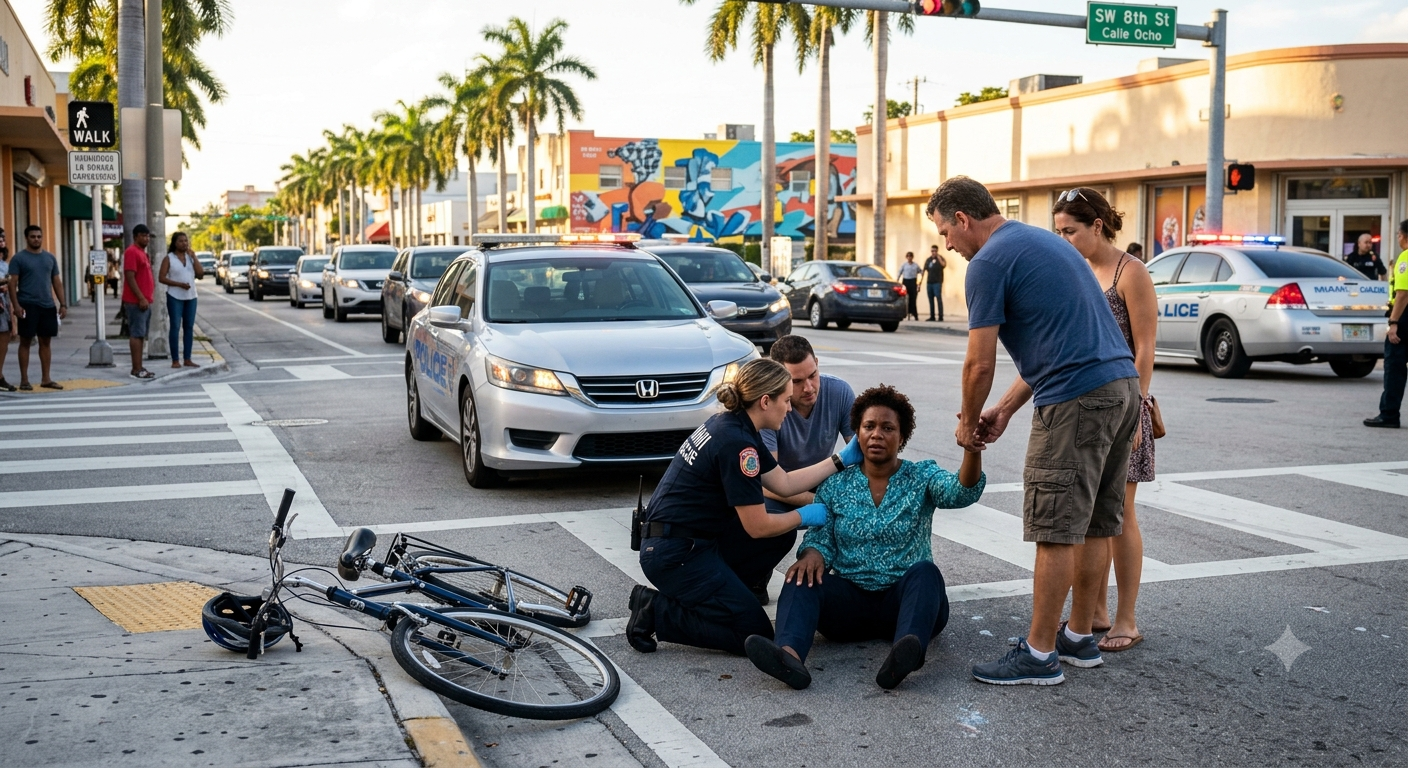
You might be replaying the moment over and over in your mind. One second you were crossing the street, maybe walking to work or heading home, and the next there were screeching brakes, a sharp impact, and then chaos. Now you are hurt, worried about medical bills, missing work, and you keep wondering one thing. Who is actually responsible for all of this, and whether DDRB lawyers can help you find answers and accountability.
If you are dealing with a Miami pedestrian accident, you are not just facing pain. You are facing questions, insurance calls, and pressure to “just sign” something. It is completely normal to feel overwhelmed and unsure where to start. The short answer is that liability depends on who broke the rules of the road and how that caused your injuries. It might be the driver, it might be shared between several parties, and sometimes the pedestrian is blamed too. The longer answer is more nuanced, and understanding it can protect your health, your finances, and your future.
This guide walks you through how Florida law looks at pedestrian crashes, who may be held responsible, and what you can do right now to protect yourself and your claim.
How does Florida law define fault in a Miami pedestrian accident?
To understand who is liable, it helps to know what the law actually expects from drivers and pedestrians. Florida has specific rules about crossing, sidewalks, and yielding. These rules are written into the traffic code that applies across the state, including Miami.
Under Florida’s pedestrian statutes, drivers must exercise due care to avoid colliding with pedestrians. They must also slow down or take proper precautions when they see a child or a confused or disabled person near the road. Pedestrians, on the other hand, must obey traffic signals, use crosswalks where required, and not suddenly leave a curb and walk into the path of a vehicle that is too close to stop in time.
So who is at fault in a pedestrian accident. In many Miami crashes, a driver is liable because they:
• Were speeding through a crosswalk.
• Failed to yield while making a turn.
• Were distracted by a phone, GPS, or dashboard screen.
• Ran a red light or stop sign.
• Drove under the influence of alcohol or drugs.
At the same time, an insurance company may argue that a pedestrian shares fault if they:
• Crossed outside a crosswalk in heavy traffic.
• Ignored a “Don’t Walk” signal.
• Stepped out from between parked cars with little visibility.
Florida uses “comparative negligence.” That means fault can be divided between everyone involved. Your compensation can be reduced by your percentage of fault. Because of this, insurance adjusters often try to shift blame toward the pedestrian, especially when the injuries are serious.
What makes liability in a Miami pedestrian crash so stressful and confusing?
After a serious crash, the law is only one part of your reality. You might be lying in a hospital bed, worried about surgery, and at the same time fielding calls from an insurance adjuster asking for a statement. That tension between needing rest and needing to protect your rights is exhausting.
Consider a few common scenarios.
Scenario 1. You had the walk signal, but the driver turned right.
You start crossing at a busy Miami intersection with the walk sign in your favor. A driver turning right on red is looking left for cars, not right for you. They roll into the crosswalk and hit you. Under Florida law, drivers must yield to pedestrians in a crosswalk with a walk signal. In that situation, the driver is very likely liable, and their insurer will try to limit the payout by questioning your actions.
Scenario 2. You crossed midblock at night.
You cross a multi-lane street away from a crosswalk. A driver hits you and says they never saw you. The insurance company may argue that you are mostly at fault for not crossing at a safer place. Yet, if the driver was speeding, distracted, or under the influence, they can still share responsibility. The outcome often depends on witness statements, camera footage, and the quality of the crash investigation.
Scenario 3. A child is hit near a school.
A child runs into the street near a school zone. Even if the child acted unpredictably,
drivers in these areas are expected to be extra cautious. Florida law specifically calls out the need to watch for children. Liability may still rest mainly on the driver if they were going too fast or not paying attention.
Because Florida is known for high pedestrian risk, agencies track and study these crashes. The Florida Department of Transportation’s pedestrian and bicycle safety programs show that many serious injuries happen in exactly these types of situations. That means your situation is not unusual, even if it feels deeply personal and unique right now.
Who can be held responsible after a Miami pedestrian accident?
Liability is not always limited to the driver who hit you. Depending on how the crash happened, several parties might share responsibility for your injuries in a pedestrian accident claim.
Possible liable parties include:
• The vehicle driver who struck you.
• The owner of the vehicle, if different from the driver.
• A rideshare company, if the driver was working at the time, subject to their insurance rules.
• A commercial employer, if the driver was on the job, such as a delivery or work truck.
• A government body or contractor, if a hazardous road design or missing signs contributed to the crash, in limited situations.
On the other side, the insurance company may try to argue that you, as the pedestrian, share fault. This is one reason many people choose to work with a personal injury lawyer. The more serious your injuries, the more aggressive the insurer tends to be about spreading blame and reducing what they pay.
What practical issues should you weigh when deciding how to handle your claim?
Once immediate medical needs are stabilized, you face a practical choice. Do you try to handle the claim on your own, or do you get legal help. Each path has tradeoffs. The right choice depends on the severity of your injuries, how clear liability is, and how comfortable you are with insurance negotiations.
The table below offers a simple comparison that often helps people think things through.
| Issue | Handling claim on your own | Working with a personal injury lawyer |
| Understanding Florida pedestrian laws | You research statutes and rules yourself, which takes time and may lead to missed protections. | Lawyer already knows the statutes and how courts apply them in Miami pedestrian cases. |
| Dealing with insurance adjusters | You talk directly with adjusters who may push for quick, low settlements or use your words against you. | Lawyer handles communication, frames facts carefully, and pushes back on unfair blame. |
| Proving fault and damages | You gather records, photos, and witness statements on your own, which can be hard while recovering. | Law firm coordinates evidence, uses crash reports, experts, and medical records to build your case. |
| Time and stress | You balance recovery with paperwork, calls, and deadlines, which can add to anxiety. | Lawyer manages the legal side, so you can focus more on healing and daily life. |
| Potential compensation | Risk of accepting less than your claim is worth because you do not know typical ranges or long term costs. | Lawyer evaluates full value, including future care, lost earning capacity, and non economic harm. |
Crash data from the Florida Highway Safety and Motor Vehicles office, available through their crash and citation reports, shows thousands of pedestrian crashes each year. Behind every line in those reports is a person who had to make these same choices about how to move forward.
What should you do right now to protect yourself after a pedestrian accident?
You may not be able to change what happened in the street, but you still have control over what you do next. A few focused steps can make a real difference in both your recovery and any claim you bring.
1. Get thorough medical care and follow up, even if you “feel okay”
Some of the most serious injuries in a pedestrian accident case do not fully show up on day one. Head injuries, internal bleeding, and soft tissue damage can worsen over time. Go to the emergency room or your doctor, explain exactly what happened, and follow their instructions. Keep copies of all records, prescriptions, and discharge papers. These documents link your injuries to the crash, which is crucial when establishing liability.
2. Preserve evidence while it is still fresh
If you can, or with the help of a family member, try to:
• Save photos of the scene, your injuries, the vehicle, skid marks, and traffic signals.
• Write down what you remember about the crash, including time, weather, and what the driver said.
• Keep names and contact information for any witnesses.
• Store damaged clothing, shoes, or personal items in a safe place.
Also request a copy of the police crash report once it is ready. That report is often a starting point for showing who violated traffic rules in a Miami pedestrian accident, even though it is not the final word.
3. Be cautious with insurance conversations before you understand your rights
Insurance adjusters are trained to be friendly and efficient. They may ask for a recorded statement or offer a quick settlement. Remember, their job is to protect the company’s bottom line. You do not have to give a detailed statement right away, and you do not have to accept the first offer.
Before signing anything that settles your claim, consider speaking with a personal injury lawyer who handles pedestrian collisions. A short consultation can help you understand whether the offer reflects your medical needs, lost income, and the pain and disruption you are going through.
Finding clarity and support after a Miami pedestrian accident
Right now, it may feel like your life has been split into “before the crash” and “after the crash.” You might be grieving lost plans, worrying about money, and feeling angry at how quickly everything changed. Those feelings are understandable. They also do not have to be the final word on your future.
Liability in a Miami pedestrian accident often comes down to careful investigation, a clear understanding of Florida law, and a steady voice pushing back when others try to blame you for what happened. You do not have to figure all of that out overnight, and you do not have to do it alone.
Take care of your body first. Protect your story by gathering what you can and being cautious about what you sign. Then consider getting legal guidance so you can understand your options and move toward a resolution that respects what you have been through and what you will need going forward.
