

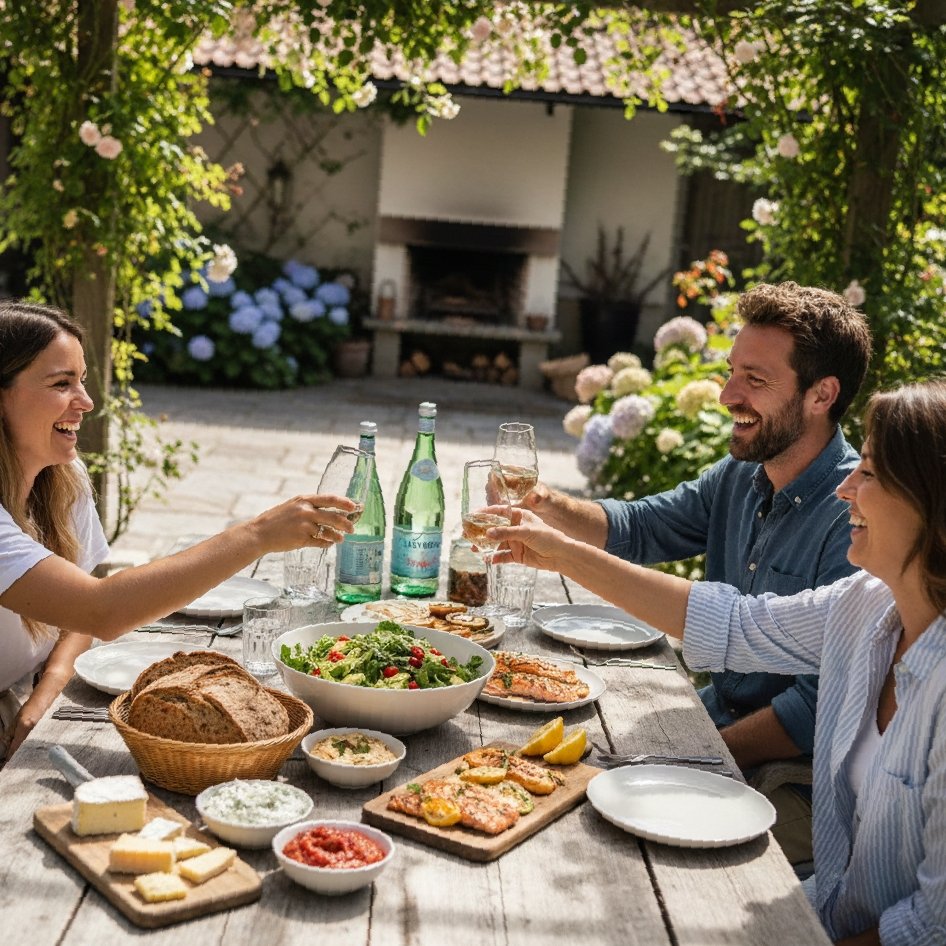
Bjudlunch is one of those words that carries more meaning than it first appears to. On the surface it points to something simple: inviting someone to lunch—often with the implication that you’re treating (bjuda lunch / bjuda på lunch). But culturally and socially, bjudlunch is about something bigger: using a shared meal as a low-pressure, high-impact way to connect, show appreciation, welcome someone in, or strengthen a professional relationship.
Lunch is uniquely positioned for this. It’s short, practical, and socially “safe.” It doesn’t demand a whole evening, it doesn’t assume intimacy, and it doesn’t require a grand plan. Yet when done thoughtfully, it can change how people feel about you, your workplace, or your collaboration. A bjudlunch can turn strangers into colleagues, colleagues into allies, and allies into long-term partners.
This complete guide explains what bjudlunch means, how to invite someone in a way that feels natural, what etiquette matters most, and how to use lunch to build trust—whether it’s in friendship, networking, onboarding, or business.
What does “bjudlunch” mean?
“Bjudlunch” is commonly understood as the act of inviting someone to lunch, typically with a friendly gesture of hospitality. It connects to these Swedish expressions:
- Bjuda lunch: to treat someone to lunch
- Bjuda på lunch: to buy lunch for someone (“lunch is on me”)
- Jag bjuder: my treat
Depending on context, bjudlunch can mean either:
- you invite someone to lunch, and you pay, or
- you invite someone to lunch and you’re hosting the moment (even if you split the bill)
Because payment expectations can differ by relationship and workplace culture, the most important principle is simple: clarity is kindness. If you’re treating, say so. If you’re splitting, say so casually.
Why lunch is the perfect invitation
Most people want stronger relationships—at work and in life—but they don’t want more complicated plans. Lunch solves that problem.
Lunch is time-bound
A coffee can drag on or feel too quick; dinner can feel too personal or too long. Lunch usually sits in the sweet spot—45 to 90 minutes, predictable and easy to accept.
Lunch is socially neutral
Dinner can signal romance or deep intimacy. After-work drinks can exclude people who don’t drink or don’t want evening socializing. Lunch is generally inclusive and neutral.
Food creates natural conversation rhythm
There are pauses built in. The conversation doesn’t need to be “on” continuously. People can talk, eat, think, and return. It reduces performance pressure.
A shared meal becomes a memory anchor
Even when the conversation is simple, the act of sitting down together stands out in a busy week. People remember who made time for them.
The real value of bjudlunch: it’s not the food
The meal matters, but what you’re really offering is:
- attention (focused time without multitasking)
- belonging (you matter enough to invite)
- appreciation (a gesture that says “thank you”)
- trust-building (human context beyond tasks)
That’s why bjudlunch is so effective for work culture, networking, and relationships: it creates connection without needing a dramatic moment.
Bjudlunch etiquette: what matters most
Lunch etiquette doesn’t need to be rigid, but a few details can prevent awkwardness and make the other person feel comfortable.
1) Be clear about who pays
This is the biggest source of discomfort. If you want to treat, say it up front in a simple way.
- “Vill du ta en lunch nästa vecka? Jag bjuder.”
- “Want to grab lunch next week? My treat.”
If you prefer splitting, also say it simply:
- “Vill du ta en lunch? Vi kan dela på notan.”
- “Want to grab lunch? We can split the bill.”
Clarity removes the mental burden from the other person.
2) Keep it appropriate to the relationship
A fancy restaurant can create pressure. A very cheap place might feel thoughtless for certain contexts (like a client lunch). Aim for comfortable, mid-range, conversational spaces unless you know the person’s preferences well.
3) Respect time
If you propose a 45–60 minute lunch, honor it. Ending on time is a form of respect, and it makes the person more likely to say yes again.
4) Consider dietary needs
This is a small question with big impact: “Any dietary preferences or allergies I should keep in mind?”
5) Avoid turning lunch into an interrogation
A good lunch has balance: questions and listening, but also sharing. People relax when they feel it’s a conversation—not an interview.
Different types of bjudlunch (and when to use each)
Not all lunch invitations are the same. The goal shapes the vibe, the location, and the conversation.
1) The welcome bjudlunch (onboarding)
Best for: new hires, interns, new teammates
Goal: belonging + orientation
This lunch is about making someone feel included and reducing the anxiety of being new. Avoid making it a “test.” Offer practical help and friendly context:
- How the team works day-to-day
- The informal norms (how people communicate, meeting habits)
- Who to ask for what
- What’s okay to not know yet
A great welcome lunch often turns into: “I’m glad I joined.”
2) The appreciation bjudlunch (thank you)
Best for: someone who helped you, mentored you, covered for you
Goal: recognition + goodwill
Make your gratitude specific: “Thanks again for handling X—can I treat you to lunch as a thank you?”
Specificity makes the gesture feel sincere, not generic.
3) The catch-up bjudlunch (relationship maintenance)
Best for: friends, old colleagues, people you like but rarely see
Goal: keep the connection alive
This is the easiest win: friendships and work relationships often fade not because anything went wrong, but because nobody books time. Lunch is the simplest recurring ritual.
4) The networking bjudlunch (career growth)
Best for: informational interviews, mentorship, industry connections
Goal: learn + build authentic connection
A good networking lunch is driven by curiosity, not extraction. Your goal shouldn’t be “get a job” in 60 minutes; it should be to learn, build rapport, and leave a strong impression of respect and competence.
5) The client bjudlunch (business relationship)
Best for: clients, partners, long-term prospects
Goal: trust + alignment
The best client lunches feel human. They’re not a pitch trapped inside a meal. A simple formula works well:
- First half: relationship + context
- Second half: one or two business priorities
- Last minutes: clear next step
How to invite someone to lunch without awkwardness
The secret is structure. A good invite is warm and clear, without overexplaining.
A simple invitation framework
- Warm opener
- A reason (light but real)
- A time window
- A suggestion of place or “near you”
- Payment clarity (if treating or if it matters)
Examples
Casual colleague “Hey! Want to grab lunch next week and catch up? I’m free Tuesday or Thursday around 12—my treat.”
Onboarding “Welcome again! If you’re up for it, I’d love to invite you to lunch this week. Easy way to get to know each other and answer any questions. Lunch is on me—Wed or Fri work?”
Networking “Hi [Name]—I’ve followed your work on [topic]. If you’re open to it, I’d love to invite you to lunch and ask a few questions about your career path. 45–60 minutes next week? My treat.”
Client “Hi [Name]—would you be up for lunch next week? I’d love to align on priorities for the next phase and also catch up a bit. I can book something near your office—my treat.”
Picking the right place: the bjudlunch venue checklist
A good lunch location is less about hype and more about comfort.
Choose a place that is:
- quiet enough to talk
- reliable and not painfully slow
- easy to reach
- flexible with dietary preferences
- not so trendy that you’ll wait in line
Avoid:
- very loud music
- cramped seating
- unpredictable service
- complicated menus that slow everything down
- places that make the lunch feel like a performance
If it’s an important lunch, reserve a table. That single action reduces stress for both people.
What to talk about at a bjudlunch (so it flows)
Many people worry about “running out of things to say.” A good lunch doesn’t require constant brilliance; it requires a simple rhythm.
Phase 1: Warm-up (first 10 minutes)
- “How’s your week going?”
- “How’s work lately?”
- “Anything fun coming up?”
The goal is comfort, not depth.
Phase 2: The meaningful middle (20–40 minutes)
Pick one or two themes:
- what they’re working on and what’s challenging
- what they’re excited about
- what they’re learning
- how they think about their role
- shared interests outside work (keep it respectful)
If it’s networking:
- their story and decision points
- what they wish they knew earlier
- how the industry actually works in practice
If it’s client-focused:
- their goals for the next quarter
- what “success” looks like
- what friction points you can remove
Phase 3: Close well (last 5–10 minutes)
Close with warmth and clarity:
- “I really enjoyed this.”
- “Let’s do it again.”
- “I’ll follow up with X by Friday.”
A clean ending leaves a strong impression.
The bjudlunch conversation toolkit (questions that work)
Great universal questions
- What’s been the highlight of your week?
- What are you focused on right now?
- What’s something you’re learning lately?
- What’s been unexpectedly hard recently?
- What do you wish more people understood about your work?
Networking-specific questions
- How did you get into this field?
- What surprised you most early on?
- What skills matter most that people underestimate?
- If you started again today, what would you do first?
- Who else would you recommend I talk to?
Work culture / onboarding questions
- What’s the easiest way to succeed in this team?
- What’s a common pitfall for new people?
- Who’s the go-to person for X?
- What do you enjoy most about working here?
Bjudlunch at work: a simple way to build culture
Work culture doesn’t come from slogans. It comes from repeated small moments. Lunch is one of the easiest ways to create those moments, especially in hybrid or fast-growing workplaces.
1) Cross-team lunches (break silos)
Invite people you don’t normally interact with:
- product + sales
- engineering + customer support
- marketing + operations
Even one lunch can reduce future friction because now there’s a human relationship behind the Slack message.
2) The “random lunch” idea
Set up an opt-in program where people get paired every few weeks for lunch. It’s low effort and high reward:
- people meet outside their bubble
- collaboration improves
- new hires integrate faster
3) Appreciation lunches
Recognition isn’t only a public shout-out. Sometimes the best recognition is private and personal: “I noticed your effort, and I want to thank you.”
A lunch does that better than a thumbs-up emoji ever will.
Bjudlunch for business: keep it human and it works
If you’re inviting clients or partners, the key is not to over-script it. People can feel when a lunch is a “sales trap.”
What works
- show genuine interest in their goals
- keep business topics focused (1–2 items)
- listen more than you talk
- leave with a clear next step
What doesn’t
- forcing a pitch
- turning the meal into a negotiation
- dominating the conversation
- choosing a venue that feels like status signaling
The best outcome of a client bjudlunch isn’t “closing the deal at dessert.” It’s that the next email feels easier, warmer, and more trusting.
How to pay without making it a scene
If you’re treating, do it calmly. The less dramatic you make it, the more comfortable it feels.
Good lines:
- “I’ve got it.”
- “No worries—my treat today.”
- “You can get the next one if you’d like.”
If they insist on paying, you can gracefully allow it, but don’t turn it into a tug-of-war. The relationship matters more than winning the receipt.
Follow-up after a bjudlunch (the step people forget)
If you want lunches to lead to stronger relationships, follow up. It takes 30 seconds.
Simple follow-up message
“Thanks for lunch—really enjoyed our chat. Your point about [specific detail] stuck with me.”
If there’s a next step
“Thanks again for lunch. I’ll send you the [resource] we talked about by Friday.”
If you want to meet again
“Would you be up for doing this again in a few weeks? I’d love to continue the conversation.”
Specificity is what makes follow-ups feel real.
Common bjudlunch mistakes (and quick fixes)
Mistake: vague invitations
Fix: offer two time options and a time window.
Mistake: unclear payment expectations
Fix: “my treat” or “we can split” in the invite.
Mistake: choosing a stressful venue
Fix: quiet, reliable, easy-to-reach places.
Mistake: making lunch feel like an interview
Fix: share as well as ask; keep it conversational.
Mistake: forgetting to close cleanly
Fix: end with warmth + next step if needed.
Copy/paste templates (Swedish + English)
Swedish: casual
“Hej! Vill du ta en lunch nästa vecka och snacka ikapp? Jag kan tis eller tors runt 12. Jag bjuder 🙂”
Swedish: split bill
“Hej! Ska vi ta en lunch nästa vecka? Vi kan dela på notan—vore kul att ses.”
Swedish: thank you
“Stort tack för hjälpen med [X]. Får jag bjuda dig på lunch nästa vecka som tack? Jag kan [dag/tid].”
English: networking
“Hi [Name]—I’ve really enjoyed your work on [topic]. If you’re open to it, I’d love to invite you to lunch and ask a few questions about your path into [field]. 45–60 minutes next week? My treat.”
English: onboarding
“Welcome again! If you’re up for it, I’d love to take you to lunch this week—easy way to get to know each other and answer any questions. Lunch is on me. Wed or Fri work?”
Final thought: bjudlunch is a small action with big social power
A bjudlunch isn’t about spending money. It’s about creating a moment where someone feels seen and included. It’s about choosing to slow down for an hour and treat another person as more than a task, a title, or a contact.
In modern life, that’s rare. And because it’s rare, it matters.
If you make bjudlunch a habit—once a month, once a week, even once a quarter—you’ll notice something quietly powerful: your relationships get warmer, your collaborations get smoother, and people start to associate you with generosity and ease.
And that reputation, built lunch by lunch, becomes one of the most valuable things you can have.
