

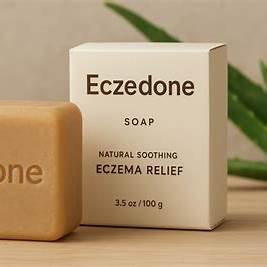
Eczedone Living with eczema can feel like your skin has a mind of its own. One week you’re fine, the next you’re itchy, red, flaky, or stinging—often for no obvious reason. In that constant cycle, even “small” daily choices can make a big difference: what you wash with, how long you shower, what you put on afterward, and how you treat early symptoms before they explode into a full flare.
That’s why products like Eczedone—marketed as an eczema-focused soap—get attention. People with eczema are always looking for something that cleans without stripping, calms the itch, and doesn’t trigger irritation. Whether you’re considering Eczedone specifically or simply want to understand how an “eczema soap” fits into a smart routine, this article will walk you through the essentials: what eczema is, why soap matters, what a dedicated eczema bar is meant to do, how to use it correctly, and how to tell if it’s helping or harming.
Understanding Eczema: Why Your Skin Reacts So Strongly
Eczema is not just “dry skin.” It’s an inflammatory condition where the skin barrier doesn’t work as well as it should. A healthy skin barrier is like a brick wall: skin cells are the bricks, and lipids (natural oils) are the mortar that holds everything together. In eczema-prone skin, that “mortar” is weaker. Moisture escapes more easily, and irritants, allergens, and microbes get in more easily.
That barrier weakness leads to:
- Dryness (because water escapes)
- Itching (because nerve endings get irritated)
- Inflammation (because the immune system reacts to triggers)
- Cracking and sensitivity (because skin is less protected)
Once itching starts, scratching often follows, and scratching damages the skin even more. It becomes a loop: itch → scratch → more barrier damage → more inflammation → more itch.
So when someone with eczema asks for “the best soap,” they’re really asking: How do I clean my skin without making the barrier worse?
Why Soap Can Make or Break an Eczema Routine
Many normal soaps and washes are designed to remove oil aggressively. That’s great for getting rid of grease and sweat. But eczema skin already struggles to keep its natural oils. If a cleanser strips too much, it can leave your skin feeling tight, dry, and itchy—sometimes within minutes.
Common cleanser problems for eczema include:
- Over-stripping surfactants (cleansing agents that remove oils strongly)
- Fragrance (a frequent irritant for sensitive skin)
- Essential oils (natural but still potentially irritating)
- High-foaming formulas (often feel “clean,” but can be drying)
- Harsh antibacterial additives (sometimes disruptive to the skin’s balance)
When a cleanser is too harsh, it can trigger flares, especially on the hands, face, inner elbows, behind knees, neck, and other common eczema zones.
An eczema-focused soap like Eczedone is typically meant to solve that: cleanse gently, support the barrier, and reduce irritation during washing.
What Eczedone Is Meant to Do (Realistic Expectations)
An eczema soap bar is not a medication. It won’t “cure” eczema in a scientific sense, because eczema is driven by genetics, immune response, environment, and barrier function. But a well-made eczema soap can do something very valuable:
1) Clean without worsening dryness
The best eczema cleansers remove sweat, dirt, and allergens while leaving the skin’s barrier as intact as possible.
2) Reduce the sting and “tight” feeling after washing
If you’ve ever stepped out of a shower and immediately felt itchy, that’s often the cleanser plus hot water and over-washing.
3) Support your routine so moisturizers work better
Think of soap as the “first domino.” If your wash step is gentle, your moisturizer step is more effective and your skin stays calmer.
4) Help people who flare from regular soaps
A lot of eczema sufferers don’t realize that their “nice smelling body wash” is one of the biggest reasons they keep flaring.
So the most realistic way to judge Eczedone is this:
Does it let you cleanse without triggering itch, tightness, burning, or increased redness—and does it make your skin easier to moisturize afterward?
If yes, it’s doing its job.
How to Use Eczedone Properly (This Is Where Most People Mess Up)
A gentle soap helps, but technique matters just as much as the product. Even the best soap can be “bad” if you use it like you’re scrubbing a greasy pan.
Step 1: Use lukewarm water
Hot water feels good, but it removes oils and can worsen itch. Aim for lukewarm.
Step 2: Keep showers short
Long showers soak the skin, then the water evaporates and pulls moisture out. If possible, stay under 10 minutes.
Step 3: Use Eczedone only where needed
You don’t necessarily need soap everywhere daily. Focus on:
- armpits
- groin
- feet
- hands
- areas with sweat or odor
For the rest of the body, water alone may be enough on many days—especially during flares.
Step 4: Lather in your hands, not directly on skin
Instead of rubbing the bar all over your body, lather it in your hands and apply the foam gently. This reduces friction.
Step 5: Rinse thoroughly
Leftover soap residue can irritate. Rinse well, especially in skin folds.
Step 6: Pat dry—don’t rub
Rubbing with a towel is basically low-level sanding. Pat gently, leaving the skin slightly damp.
Step 7: Moisturize immediately (“Soak and seal”)
This is the most important step. Within a few minutes of drying, apply a thick moisturizer or ointment to lock water in. Soap is only half the plan. Moisturizer is the other half.
Building a Simple Eczema Routine Around Eczedone
Here’s a practical routine you can follow without turning your bathroom into a pharmacy.
Morning
- Quick rinse (or a short wash only on sweat/odor areas)
- Apply moisturizer on dry-prone zones
- If you have active patches: apply your prescribed treatment as directed (if you use one)
Evening
- Short lukewarm shower
- Use Eczedone gently
- Pat dry
- Moisturize head-to-toe (or at least on eczema-prone areas)
During a flare
- Reduce washing frequency and soap coverage
- Use moisturizer more often
- Avoid friction and tight clothing
- Keep nails short to reduce damage from scratching
How to Tell If Eczedone Is Helping
Give it a fair trial—usually a couple of weeks—while keeping everything else as steady as possible (same moisturizer, same laundry detergent, same routine).
Signs it’s helping:
- Less tightness after washing
- Less itching within an hour after bathing
- Reduced flaking/dryness
- Fewer “mystery” flare-ups tied to showering
- Skin feels calmer and more comfortable
Signs it may not be right for you:
- Burning or stinging during use
- Redness that increases after washing
- More itch immediately after bathing
- New rash patterns in areas you wash
If you notice irritation, stop and reassess. Even eczema products can contain ingredients that some individuals don’t tolerate well.
Extra Tips That Make Eczema Soaps Work Better
Control your environment
- Dry air worsens eczema. If your home is dry, a humidifier can help.
- Wear breathable fabrics, especially when sweating.
Fix your laundry routine
Laundry products are a sneaky trigger. If your skin flares constantly, consider fragrance-free detergent and avoid scented fabric softeners.
Manage scratching
Scratching feels like relief but it extends flares. If itching is intense:
- apply a cool compress
- moisturize again
- wear cotton gloves at night if you scratch in sleep
Don’t over-wash your hands
Hand eczema is common. Try:
- lukewarm water
- gentle soap
- moisturize after every wash when possible
The Bottom Line
Eczedone is best understood as an eczema-friendly cleansing option—a product meant to reduce one of the biggest daily triggers for eczema: harsh washing. The biggest benefit of a soap like this is not magic healing; it’s that it helps you stop making your skin worse every time you clean it.
If you use it with good technique—short lukewarm showers, gentle lathering, no scrubbing, and immediate moisturization—you give your skin barrier the best chance to calm down. And when the barrier improves, many people find that flares become less frequent, itch becomes more manageable, and skin feels more predictable.
Eczema care is rarely one single product. It’s a system: gentle cleansing + consistent moisturizing + trigger control + appropriate treatment during flares. If Eczedone helps you nail the cleansing part without irritation, it can be a useful tool in that bigger system.
If you’d like, tell me your eczema area (hands, face, body, scalp) and whether you’re oily, dry, or mixed—and I can tailor a simple daily routine around Eczedone without adding a bunch of extra products.
