

Water damage can start with a small leak and end with torn-out drywall, ruined flooring, and a lingering musty smell. The biggest reason costs vary so much is simple: water damage restoration isn’t one service—it’s a process. One home needs fast extraction and drying. Another needs demolition, disinfecting, and rebuilding.
This guide breaks down realistic 2026 U.S. pricing, the factors that move your quote up or down, what’s typically included, and how to avoid paying for the wrong scope.
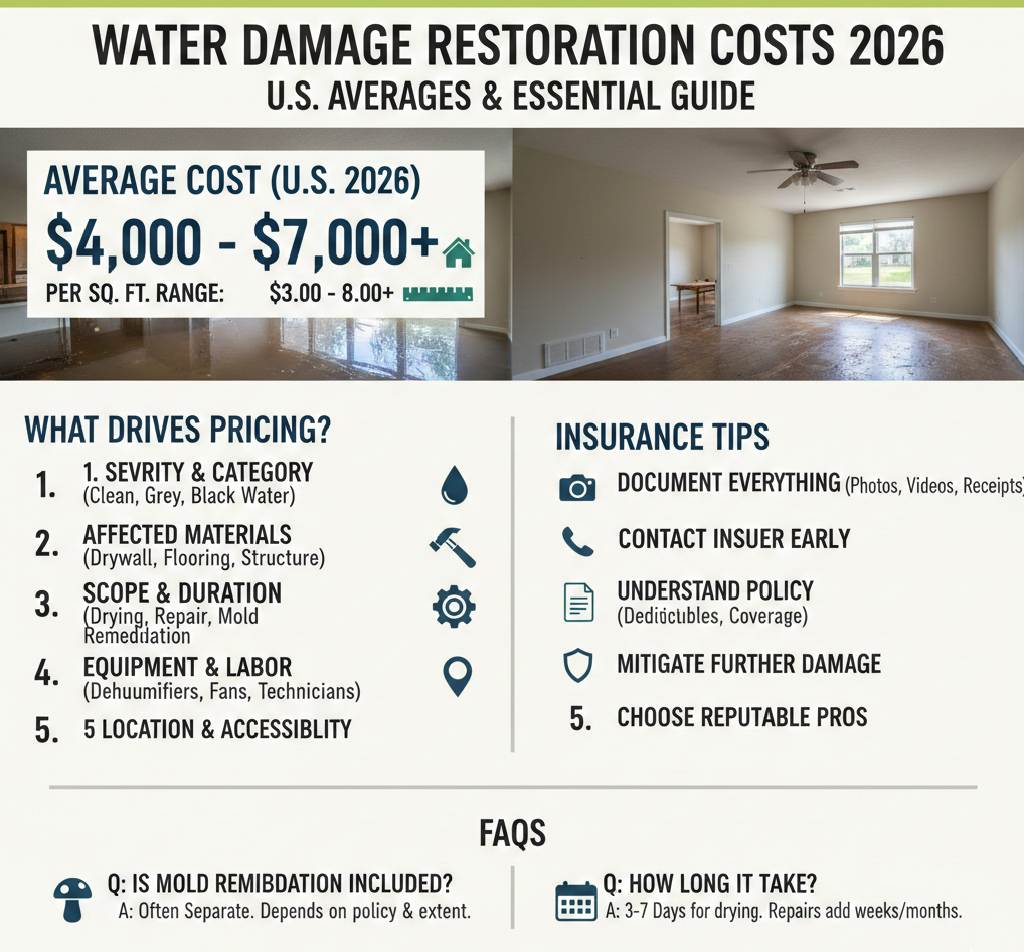
Average water damage restoration cost in 2026
In the U.S., most homeowners land somewhere between $1,400 and $6,400, with many projects averaging around $3,800–$4,000.
That range usually covers a common situation like:
- A leak or overflow affecting one or two rooms
- Water extraction (if needed)
- Drying equipment (fans + dehumidifiers)
- Basic material removal and cleanup
- Some repairs (depending on contractor and scope)
Severe cases (multiple rooms, contaminated water, major demo + rebuild) can run much higher, especially if cabinets, subfloor, insulation, or structural materials are involved.
Water damage cost per square foot (simple rule of thumb)
Many restoration companies estimate using affected square footage. A practical national ballpark is:
- $3 to $7.50 per sq ft, depending on water type and contamination level.
Cost per sq ft by water category (why this matters)
Water damage is often grouped into three “types”:
- Clean water (fresh supply line, rain leak into a clean area)
- Typically cheaper because sanitizing is lighter.
- Gray water (washer discharge, dishwasher overflow, some drain water)
- Higher cost due to stronger cleaning and more material removal.
- Black water (sewage backup, river/floodwater, heavy contamination)
- Usually the most expensive because porous materials often must be removed and strict safety protocols apply.
Translation: the dirtier the water, the more demolition + disinfection + disposal you’re paying for.
What’s included in water damage restoration?
A professional job usually includes some combination of:
1) Emergency assessment
- Moisture inspection (walls, floors, ceilings)
- Identifying the source (leak, overflow, roof, appliance)
2) Water extraction (if there’s standing water)
- Pumps / extraction tools to remove water fast
3) Drying & dehumidification
- Air movers (fans) and dehumidifiers
- Daily or periodic moisture checks
- Drying time often takes 2–5 days, sometimes longer for wall cavities, subfloors, and basements
4) Cleaning & sanitizing
- Antimicrobial treatments (especially for gray/black water)
- Odor control when needed
5) Removal of damaged materials
- Wet drywall, insulation, carpet pad, baseboards
- Sometimes cabinets or flooring sections
6) Repairs / rebuild (sometimes separate)
Some companies do mitigation only (dry-out + cleanup). Others offer full rebuild (drywall, paint, trim, flooring). Always confirm which one you’re being quoted.
The biggest factors that drive the price up
Response time (hours matter)
Water spreads. The longer it sits, the deeper it soaks into porous materials. Quick action often reduces demolition and prevents mold.
Where the water went
Costs rise when water gets into:
- Drywall cavities
- Insulation
- Under tile/hardwood
- Subfloor
- Ceilings
- Cabinets (especially particle board)
Flooring type
- Carpet can sometimes be saved in clean-water situations if extracted quickly.
- Hardwood often warps, and subfloor saturation can require removal.
- Laminate frequently swells and may need replacement.
Equipment days (how long fans/dehumidifiers run)
Many quotes include a certain number of “equipment days.” If drying takes longer, the cost can climb—so moisture mapping and ventilation decisions matter.
Contamination level
Gray/black water typically means more removal, more disinfecting, and higher disposal costs.
Mold risk (and “secondary damage”)
If drying is delayed, mold can become a second project. Prevention is cheaper than remediation.
Cost examples (real-world style scenarios)
- Small kitchen supply-line leak, caught early:
Extraction + 2–3 days drying + minor drywall/trim repair - Overflowed bathtub into ceiling below:
Ceiling drywall removal + drying wall cavities + repainting + possible insulation replacement - Basement seepage or sump failure:
Water removal + longer drying time + possible flooring removal + humidity control - Sewer backup (black water):
Porous material removal + deep disinfecting + stricter safety + bigger rebuild
Does homeowners insurance cover water damage restoration?
Often yes, if the damage is sudden and accidental (like a burst pipe). But many policies may deny or limit coverage when the cause is:
- Long-term leaks or poor maintenance
- Flooding from outside (usually needs separate flood coverage)
- Sewer backup (may require an endorsement)
Insurance checklist (do this immediately)
- Take photos/videos before cleanup
- Save receipts (equipment rental, emergency services, hotel if needed)
- Keep damaged materials until adjuster guidance (if safe)
- Ask contractors for an itemized scope (mitigation vs rebuild)
- Get claim info in writing when possible
How to avoid overpaying (and still fix it right)
1) Get 2–3 quotes and compare scope
Don’t compare “total price” only—compare what’s included:
- Extraction?
- How many equipment days?
- Moisture readings included?
- Antimicrobial treatment?
- Demo/removal + disposal?
- Repairs included or separate?
2) Ask these questions
- Is this mitigation only, or full restoration (repairs too)?
- What water category are you treating and why?
- How will you verify the structure is dry (moisture readings)?
- What materials will be removed vs dried in place?
- What’s your plan to prevent mold?
3) Move fast
Even if you’re waiting on insurance, immediate mitigation usually reduces the final bill.
FAQs (SEO + schema-friendly)
How much does water damage restoration cost in 2026?
Most U.S. homeowner projects fall between $1,400 and $6,400, with many averaging around $3,800–$4,000, depending on severity and repairs.
What’s the average cost per square foot?
A common ballpark is $3 to $7.50 per sq ft, influenced heavily by contamination level and how much material must be removed.
What’s the difference between water mitigation and restoration?
Mitigation stops the damage (extract water, dry, sanitize). Restoration rebuilds what was removed (drywall, flooring, paint, trim).
How long does water damage restoration take?
Many jobs take 2–5 days for drying, plus repair time if materials were removed.
Will mold happen after water damage?
Mold risk increases when moisture remains trapped in walls/floors. Fast extraction, strong airflow, and proper dehumidification help prevent it.
Is it cheaper if I do it myself?
Small, clean-water spills might be manageable. But hidden moisture behind walls and under floors is easy to miss—professional moisture mapping can prevent expensive repeat damage.
