

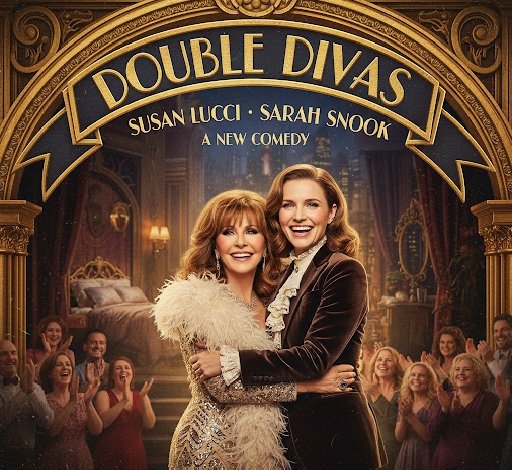
Sometimes a single photo tells a whole story—about craft, admiration, and the way Broadway still works as a crossroads for every corner of entertainment. That’s what happened with the widely searched “Susan Lucci Sarah Snook Broadway photo,” a backstage snapshot that spread far beyond theater circles. It didn’t tease a new project or serve as a publicity stunt. Instead, it captured something simple: one iconic performer celebrating another at the exact moment the Broadway spotlight burned brightest.
This wasn’t a carefully staged red-carpet pairing. It felt like what it actually was: a warm, post-show moment, the kind of thing that has always happened in dressing-room hallways. Social media simply gave it wings—and fans turned it into a shared reference point.
The Photo That Sent People Searching
The photo entered the public conversation after Susan Lucci—television legend, longtime face of daytime drama, and a name that instantly signals “icon”—went to see Sarah Snook on Broadway and shared a celebratory post afterward. Lucci didn’t write a vague, generic caption. She wrote with the excited specificity people use when they’ve genuinely been knocked out by a performance. She described meeting Snook after the show, sharing a laugh, and praising the work in emphatic terms.
That combination—Lucci’s star power, her sincerity, and the intimacy of a backstage meet—sparked immediate curiosity. People who hadn’t tracked Broadway’s season suddenly had questions: Why is Sarah Snook on Broadway? What is she doing in this show? And why did Susan Lucci sound so impressed?
A photo like that doesn’t just document a night out. It works like an endorsement, and it carries extra punch because it comes from someone whose career proves how much stamina matters.
Why Susan Lucci’s Reaction Carried Weight
Pop culture often treats Susan Lucci as an emblem of glamour and fame, but she built her legend on work. Daytime television demands a relentless kind of acting discipline: constant memorization, emotional availability on command, continuity over years, and a pace that would flatten most actors. Whatever someone thinks of soaps, the workload remains very real.
That background matters because Sarah Snook’s Broadway challenge in The Picture of Dorian Gray also centers on workload—just expressed through a different medium, a different form, and a different audience. When Lucci reacts with awe, it doesn’t land as celebrity small talk. It lands as one working performer recognizing another performer doing something legitimately punishing and impressive.
A fan can say, “She was amazing.” Lucci can say, “I know how hard that is.”
The Show Behind the Snapshot: A Broadway “Event,” Not Just a Booking
By the time Lucci saw Snook, the production had already earned a reputation as more than a standard Broadway play. People talked about The Picture of Dorian Gray as an “event”—the kind of ticket you buy because you want to see something structurally unusual, technically ambitious, and difficult to pull off.
The hook sounds simple and feels brutal in practice: Sarah Snook performs all the roles—dozens of characters—using a blend of live performance and onstage video techniques. That feat travels fast in conversation because anyone can grasp it in a single sentence: “She plays 26 characters.” Even people who don’t know the plot understand the scale. The detail signals virtuosity and risk.
Broadway audiences love risk when the performer makes it look inevitable. When a show looks like it could collapse without total command, every successful performance feels like a tightrope walk completed in public.
So a backstage photo featuring Susan Lucci didn’t just add celebrity sparkle. It also underlined what theatergoers already felt: this show mattered.
Why the Internet Loved This Pairing
The pairing carried “two worlds collide” energy. Lucci and Snook come from very different corners of fame.
Lucci represents an era of television that built familiarity through repetition: day after day, year after year, a character becomes part of viewers’ routines. Many people feel like they know her because she lived in their living rooms for decades.
Snook represents the prestige-TV era: a career propelled by a high-profile series, critical recognition, and then a leap into a high-stakes stage project. Her fame burns intense rather than slow.
When the photo put them together in one frame, it became instantly symbolic: legacy meeting the present, daytime drama meeting prestige drama, television meeting theater, long-form endurance meeting theatrical endurance. The image stayed simple, but the story people projected onto it grew big.
Theater fans, in particular, responded because Broadway naturally creates these meetings. On any given night, the audience can include film actors, streaming stars, musicians, athletes, industry legends, and first-timers chasing a buzzy title. After the curtain call, the backstage hallway turns into a living map of entertainment. Social media now makes that map public.
The Backstage Photo as a Broadway Tradition
The whole story also carries a classic Broadway flavor—in a good way.
Backstage congratulations form a quiet tradition: performers bring friends, colleagues visit on their night off, and respected veterans stop by to say, “That was extraordinary.” The exchange usually stays brief, sincere, and fueled by mutual understanding of how hard the job is.
For most of Broadway history, proof of those encounters lived in memories, signed Playbills, and the occasional snapshot. Now the snapshot goes online. Once it goes online, it becomes searchable. Once it becomes searchable, it attracts anyone who wants a connection to the moment.
That’s why “Susan Lucci Sarah Snook Broadway photo” keeps working as a search phrase. People don’t just want “two celebrities smiling.” They want “the Broadway moment everyone keeps referencing.”
Why People Keep Returning to the “26 Characters” Detail
Even if you never see the show, the headline fact sticks: Snook performs 26 roles.
That number does more than impress. It frames the performance as athletic. It tells you the actor must switch voice, posture, energy, and emotional truth rapidly, while still maintaining a coherent story. It implies precision, stamina, and a kind of mental focus that’s hard to imagine unless you’ve stepped onstage yourself.
The production’s technical style adds another layer. It signals modern theater that doesn’t pretend film never happened. Instead, it borrows film language and threads it into live performance, creating something hybrid: theater that can shift scale instantly, from intimate to cinematic.
That ambition also explains why other performers went to see it. Actors often make the best audience for ambitious stage work because they know exactly what they’re looking at. When Lucci posted her reaction, she essentially offered a professional review written in pure emotion rather than critic-speak.
How Awards Attention Changed the Photo’s Meaning
Even without awards, the moment stands on its own. Awards season, however, reshapes context. Once Snook’s performance drew major recognition, people looked back at posts like Lucci’s and treated them as early validation—proof that the excitement didn’t come from hype alone.
Social media accelerates this pattern: it creates a timeline of reactions, and later achievements turn those reactions into narrative “receipts.” The photo stops functioning as “a fun backstage pic” and starts functioning as “part of the season’s story.”
In other words, the internet doesn’t only share images. It also curates them into collective memory.
Why This Particular Photo Felt So Good
A lot of celebrity content feels transactional: posed photos, brand partnerships, compliments that could apply to anything. The Lucci–Snook photo landed differently because it suggested something human and specific:
- A star who didn’t need to go out chose to spend the evening at the theater.
- A performer left genuinely energized by what she saw.
- A backstage meeting looked friendly rather than staged.
- A public compliment carried the unmistakable ring of sincerity.
That sincerity stands out, and people notice it.
The underlying message also feels refreshing: no matter how famous you are, you can still get thrilled by someone else’s work. No matter how long your career runs, you can still show up as a fan.
The Larger Story: Broadway as the Place Where “Universes” Overlap
Ultimately, the reason this photo traveled so far comes down to what Broadway does better than almost any cultural space: it creates shared experiences that can’t be streamed, paused, or scrolled past in real time.
You have to show up. You have to sit there. The performance happens once, in your presence, and then it disappears.
That scarcity makes live theater feel meaningful—and it makes the rituals around it feel meaningful too. Backstage photos, signed Playbills, stage-door hellos: they all help theater feel like a community rather than a product.
So when Susan Lucci posts a photo with Sarah Snook after a Broadway night out, it doesn’t read like simple celebrity spotting. It reads like theater culture doing what it has always done: one performer lifting up another, and an audience witnessing it—this time through a screen.
A Snapshot That Became a Signal
In the end, people didn’t only search for the image. They searched for what the image signaled:
- that The Picture of Dorian Gray deserved the chatter,
- that Snook took on something unusually demanding,
- and that even a veteran like Lucci walked away impressed.
One backstage photo can’t capture the performance itself. But it can capture the atmosphere around the performance—the buzz, the respect, and the joy of recognizing excellence while it’s happening.
That’s why the Susan Lucci–Sarah Snook Broadway photo stuck: it didn’t promise more. It already felt like enough.
Conclusion
The Susan Lucci Sarah Snook Broadway photo endured because it captured more than a celebrity meet-and-greet. It showed how Broadway still creates real, in-person moments of recognition—one performer watching another do something difficult, then saying so out loud with genuine excitement. In an internet culture full of staged content and recycled hype, that kind of authenticity reads as rare.
It also worked as a shorthand for a specific point in time: a buzzy production, a high-wire performance, and the kind of cross-generational respect that reminds people why live theater still matters. The show ends, the curtain falls, and the performance disappears—but a single backstage snapshot can preserve the feeling. That’s why people kept searching for it: not just to see the photo, but to understand what it represented.
