

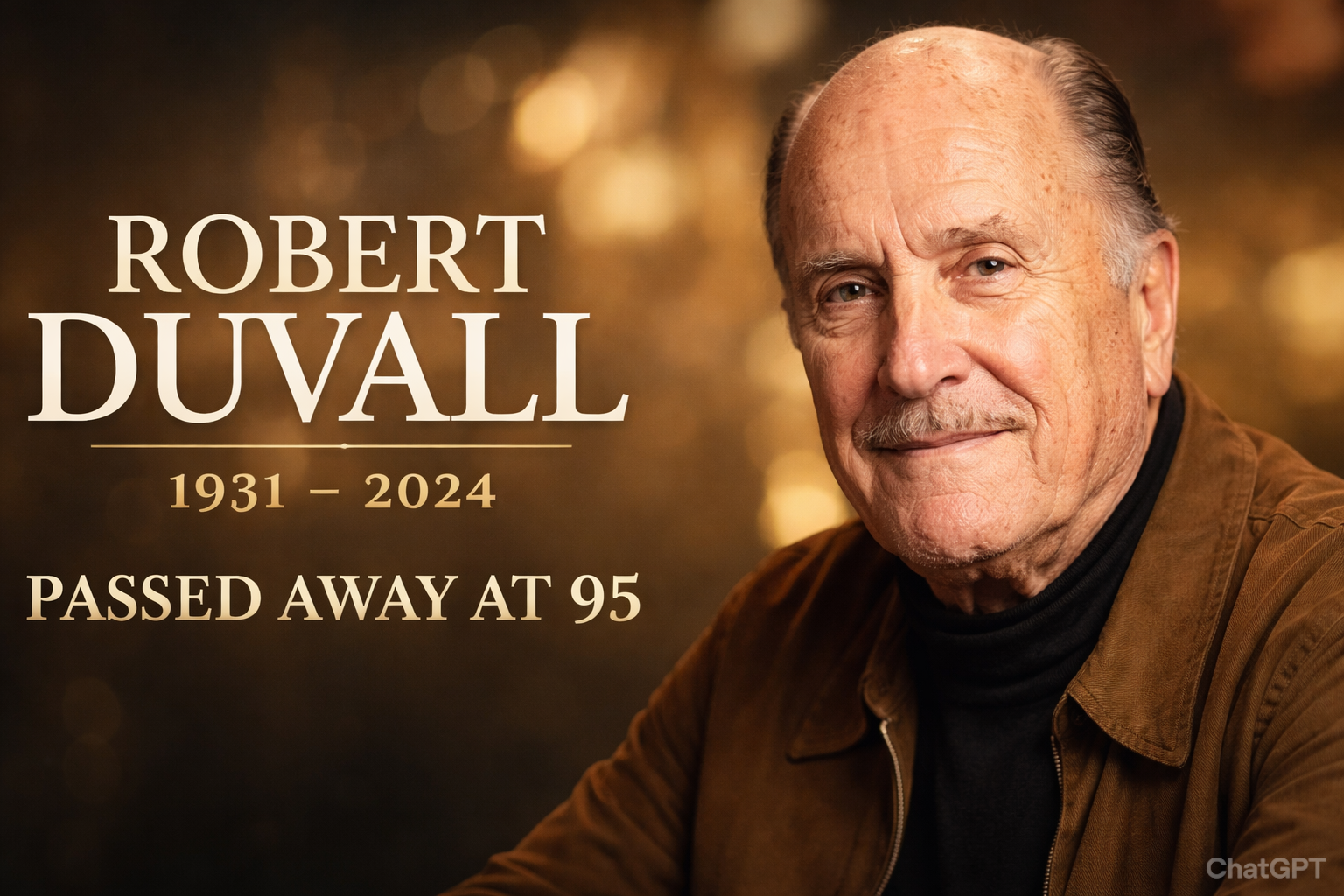
The news headline “Robert Duvall Passed Away at 95” has stirred deep emotions across the film industry and among fans worldwide. For decades, Robert Duvall represented a rare kind of actor—disciplined, understated, and deeply authentic. His passing marks the end of an era in Hollywood, but his legacy remains as powerful as ever.
In this article, we take a closer look at his life, career, achievements, and the lasting imprint he leaves behind.
Early Life and the Foundation of Greatness


Robert Duvall was born on January 5, 1931, in San Diego, California. Raised in a military family, discipline and structure were part of his upbringing. However, it was his passion for storytelling that ultimately defined his path.
He studied acting at the prestigious Neighborhood Playhouse School of the Theatre in New York, where he trained under Sanford Meisner. Interestingly, he shared classrooms and early-stage struggles with other future stars like Dustin Hoffman and Gene Hackman. This generation of actors would later redefine American cinema with their commitment to realism and emotional depth.
From theater to television and eventually to film, Duvall’s early years were a masterclass in patience and persistence.
Breakthrough Roles That Defined a Career

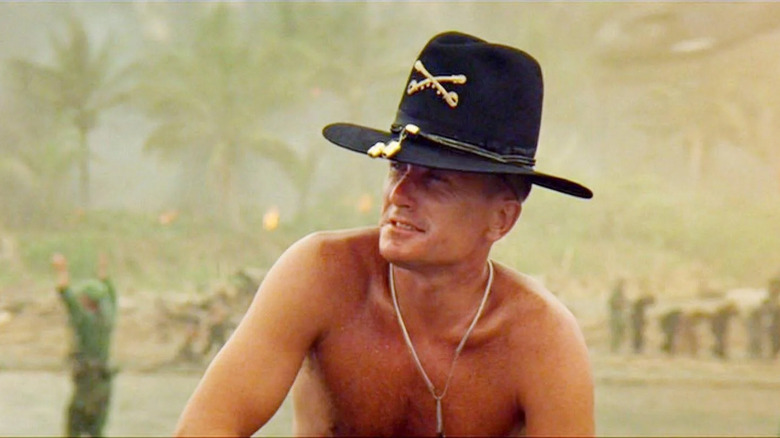


Robert Duvall’s breakthrough came when he played Tom Hagen in The Godfather (1972), directed by Francis Ford Coppola. His portrayal of the calm, strategic consigliere to the Corleone family was subtle yet commanding. Unlike louder performances, Duvall relied on restraint—and that restraint became his signature.
Some of his most iconic performances include:
- Lieutenant Colonel Kilgore in Apocalypse Now
- Marine pilot in The Great Santini
- Mac Sledge in Tender Mercies
In Tender Mercies, Duvall delivered one of the most emotionally nuanced performances of his career. His portrayal of a broken country singer earned him the Academy Award for Best Actor. The performance was quiet, controlled, and profoundly human—exactly what audiences came to expect from him.
Between these roles, Duvall demonstrated a rare ability to disappear into characters. He wasn’t interested in being flashy; he was interested in being truthful.
Awards, Recognition, and Industry Respect
Robert Duvall received numerous accolades over his long career. While awards never defined him, they certainly reflected the respect he earned.
His major recognitions include:
- Academy Award for Best Actor (Tender Mercies)
- Multiple Academy Award nominations
- Emmy Award
- Golden Globe Awards
- Screen Actors Guild honors
Beyond trophies, Duvall earned something more valuable: the admiration of his peers. Directors often praised his preparation and discipline. Fellow actors respected his ability to elevate every scene without overpowering it.
Even in ensemble casts, he had a way of anchoring the story.
A Style That Redefined Masculinity on Screen
One of the most fascinating aspects of Duvall’s career was how he portrayed masculinity. His characters were often strong, sometimes intimidating, but rarely one-dimensional.
He played:
- Military officers with internal conflict
- Fathers struggling with pride and vulnerability
- Criminal figures with calm intelligence
- Broken men searching for redemption
Between these portrayals, Duvall offered audiences something rare: complexity. He showed that strength could coexist with emotional depth. He proved that subtlety could be more powerful than spectacle.
His performance in Apocalypse Now delivered one of cinema’s most quoted lines, yet it was the quiet intensity behind the character that made it unforgettable.
Later Years: Still Commanding the Screen
Even as he entered his 70s, 80s, and beyond, Robert Duvall continued acting. Many performers slow down, but Duvall maintained a steady presence in both independent films and major productions.
His later performances showed:
- Mature emotional layering
- Effortless screen presence
- A refusal to rely on nostalgia
He didn’t chase fame. He chose roles carefully, often gravitating toward character-driven stories. This approach preserved the integrity of his filmography.
When the headline “Robert Duvall Passed Away at 95” began circulating, it felt less like losing a star and more like losing a cornerstone of American cinema.
Influence on Modern Actors
Many contemporary actors cite Duvall as a major influence. His commitment to realism helped shape what we now consider “serious acting.”
His influence can be seen in:
- The grounded performances of character actors today
- The shift toward naturalistic dialogue delivery
- The emphasis on emotional authenticity over theatrics
Actors learned from Duvall that sometimes the most powerful performance is the one that whispers instead of shouts.
His work in films like The Godfather remains a reference point in acting schools worldwide.
Personal Life and Private Nature
Despite decades in Hollywood, Robert Duvall maintained a relatively private personal life. He valued simplicity and often stayed away from excessive media attention.
He was known for:
- Supporting independent filmmaking
- Encouraging young actors
- Maintaining long-term creative partnerships
This grounded approach mirrored his acting style—focused, disciplined, and sincere.
The Legacy He Leaves Behind
When we reflect on the phrase “Robert Duvall Passed Away at 95,” it’s impossible not to consider the magnitude of his contributions.
His legacy includes:
- Over six decades of powerful performances
- Roles that shaped cinematic history
- A blueprint for character-driven storytelling
- A reputation built on professionalism and integrity
Between blockbuster classics and intimate dramas, Duvall proved that true artistry transcends trends.
Hollywood has seen many stars rise and fall, but very few maintain relevance and respect across generations. Duvall did exactly that.
Final Thoughts: Remembering a True Artist
The passing of Robert Duvall at 95 marks the end of an extraordinary chapter in film history. He wasn’t just an actor; he was a craftsman. Every performance felt studied yet natural, powerful yet restrained.
While headlines announce his departure, his work ensures he will never truly be gone. Future generations will continue discovering The Godfather, Apocalypse Now, and Tender Mercies, and they will see what we saw—a master at work.
Robert Duvall didn’t chase celebrity. He pursued excellence. And in doing so, he became one of the greatest actors of his time.
His story is no longer being written, but it will forever be watched.
