

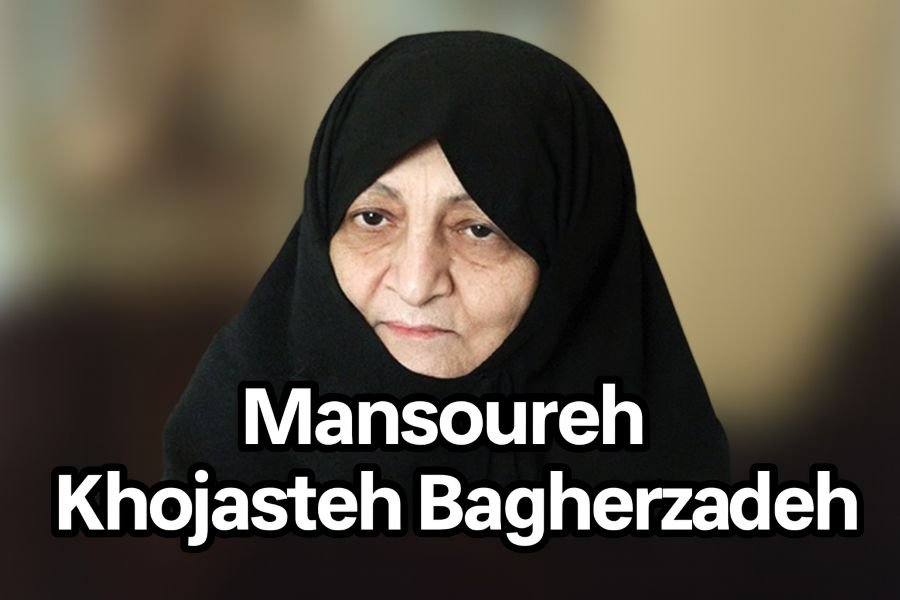
Mansoureh Khojasteh Bagherzadeh may not be a household name, but she has played a crucial, albeit behind-the-scenes, role in the political and religious history of Iran. Known primarily as the wife of Iran’s Supreme Leader, Ayatollah Ali Khamenei, her life has largely remained private. However, her influence is undeniable. In this article, we explore the life and legacy of Mansoureh Khojasteh Bagherzadeh, whose journey represents a blend of tradition, faith, and political quietude.
Early Life and Family Background
Mansoureh Khojasteh Bagherzadeh was born in 1947 in Mashhad, a city revered in Shia Islam and known for its rich religious heritage. Her family was deeply religious, and her father, Mohammad Esmaeil Khojasteh Bagherzadeh, was a well-known businessman in Mashhad. Growing up in such an environment, Mansoureh developed strong values of piety and modesty, which shaped much of her future life.
Details about her formal education remain unclear, but it is likely that her upbringing focused on religious and traditional values, in line with the norms of her family. Her upbringing provided her with the foundations that would later influence her role in the Khamenei family and the Islamic Republic of Iran.
Meeting Ali Khamenei and Marriage
Mansoureh’s life took a significant turn when she met Ali Khamenei, a young cleric, in 1964. Their shared religious and ideological beliefs led to their marriage in 1965. Mansoureh was still a teenager at the time, which has led to discussions about child marriage in Iran. Despite this, the marriage was a union of faith and commitment. Ayatollah Mohammad Hadi Milani, a respected cleric, delivered their marriage sermon.
The early years of their marriage saw little public attention. The couple lived a modest life, driven by their shared commitment to Islamic principles and political activism. As Khamenei became involved in the opposition against the Pahlavi regime, Mansoureh supported him by maintaining their home and caring for their growing family.
Family Life and Role as a Mother
Mansoureh and Ali Khamenei had six children, four sons and two daughters. Their names are Mostafa, Mojtaba, Masoud, Meysam, Boshra, and Hoda. The Khamenei children were raised in a household steeped in Islamic teachings and values. Mansoureh played an essential role in creating a stable, faith-centered environment despite the political turmoil around them.
While Ali Khamenei was often occupied with political and religious activities, Mansoureh managed the household and provided emotional support. Raising six children under such challenging circumstances required immense strength and resilience. She ensured that the children grew up with a deep sense of religious commitment, even during times of upheaval.
The Role During Revolutionary Times
Mansoureh’s role in the Iranian Revolution, though largely unseen, was crucial. While her husband was involved in political activism and was imprisoned by the Pahlavi regime, she managed their home and cared for their children. She also protected the materials that were vital to Khamenei’s revolutionary work, sometimes hiding documents during raids.
Her actions, though never publicly acknowledged, were essential to the success of her husband’s political activities. Mansoureh’s sacrifices helped ensure that Ali Khamenei could continue his activism, which would later lead to his rise to power in post-revolutionary Iran.
Life as the Wife of the President and Then the Supreme Leader
In 1981, Ali Khamenei became the President of Iran, and Mansoureh’s life entered a new phase. Though she held the informal title of “First Lady,” she never assumed a public role. She remained deeply private and did not participate in the typical public duties associated with the wives of world leaders. Instead, she focused on maintaining her family’s stability during a difficult time marked by the Iran-Iraq War, economic hardship, and political turbulence.
When Ali Khamenei became the Supreme Leader in 1989, Mansoureh’s role shifted again. Despite her husband’s increased prominence, she continued to avoid public attention. She did not assume any formal responsibilities and remained out of the spotlight. She focused on supporting her family, offering counsel, and maintaining the values of modesty and faith that had guided her life.
Public Image and Legacy
Mansoureh’s public image has been shaped largely by her role as the wife of the Supreme Leader. Supporters view her as a symbol of strength, resilience, and dedication to her family and faith. Her quiet support and steadfast commitment to her husband’s work have earned her respect within certain circles, even if she remained largely invisible in the public sphere.
Critics, however, often use Mansoureh’s life as a lens through which to critique the broader power structures within Iran. Her early marriage to Ali Khamenei, especially at such a young age, has been highlighted in discussions about child marriage in the country. Furthermore, the Khamenei family’s concentration of power has led some to accuse them of creating a dynastic system that perpetuates political influence within a small circle.
Mansoureh’s Influence
Though Mansoureh has never held a formal political position, her influence has been significant. Her role in supporting her husband’s career, especially during the most challenging years, was indispensable. She helped maintain the family’s unity, which was essential for Ali Khamenei’s long tenure in power.
Mansoureh’s story is one of sacrifice, resilience, and quiet strength. She never sought the limelight, but her influence within the Khamenei family and the Iranian political system is undeniable. Her actions, though not widely recognized, contributed greatly to the political stability and success of her husband’s career.
Conclusion
Mansoureh Khojasteh Bagherzadeh may never have sought public attention, but her life intertwines with the most important events in modern Iranian history. As the wife of the Supreme Leader of Iran, she played an essential role in the political and religious framework of the country, even though she remained largely out of the public eye. Her life exemplifies the power of quiet influence and the importance of private support in the maintenance of political systems.
Mansoureh’s legacy is one of faith, family, and quiet endurance. Her role in Iran’s political history, though not often visible, has been crucial in shaping the country’s modern political landscape. She remains a symbol of the strength and resilience of women who support powerful political figures from behind the scenes.
