

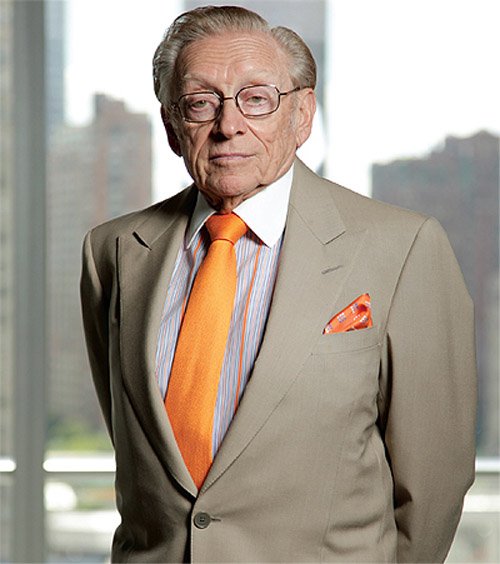
Larry Silverstein is a name that resonates with resilience, determination, and urban transformation. Born in Brooklyn, New York, on May 30, 1931, he has faced numerous challenges throughout his life. From his early beginnings in real estate to his pivotal role in rebuilding the World Trade Center after the tragic events of September 11, 2001, Silverstein’s story showcases perseverance and vision.
Early Life and Career Beginnings
Larry Silverstein entered the world of real estate early. Raised in Brooklyn, New York, he learned the business from his father, a classical pianist who later became a real estate broker. In the 1950s, Silverstein used funds from friends and investors to buy, renovate, and lease a building on East 23rd Street in Manhattan. This risky venture proved successful and marked the beginning of his real estate career.
As Silverstein’s career grew, he acquired several key properties across Manhattan, including 11 West 42nd Street, 120 Wall Street, and 529 Fifth Avenue. In 1957, he founded Silverstein Properties, a full-service real estate development and management firm. This company laid the foundation for Silverstein’s expanding empire.
The Landmark Lease: Acquiring the World Trade Center
A defining moment in Silverstein’s career came in July 2001 when Silverstein Properties secured the 99-year lease for the World Trade Center complex. The deal, valued at $3.2 billion, became one of the most significant in real estate history. At that time, the World Trade Center stood as an iconic landmark in New York City, and Silverstein’s acquisition marked a major milestone.
However, just weeks after securing the lease, terrorists attacked. On September 11, 2001, they destroyed the Twin Towers. The devastation was immense, but Silverstein remained resolute. Instead of retreating, he saw an opportunity to rebuild the buildings and restore the spirit of New York City.
Legal Battles and Financial Setbacks
After the 9/11 attacks, Silverstein faced a complicated legal battle over insurance claims. The insurance policies for the towers had not been finalized, and Silverstein’s firm engaged in a lengthy dispute with insurers. The issue was whether the two plane crashes on 9/11 should be counted as one event or two, which would affect the payout.
Silverstein argued that the attacks should count as two separate events. After years of litigation, he achieved a significant victory in 2007. The insurers agreed to a $4.55 billion settlement, one of the largest insurance payouts in history. This funding became crucial for the rebuilding process.
Despite the challenges, Silverstein stayed committed to the project. His firm continued to pay rent on the destroyed site while pressing forward with redevelopment plans.
Rebuilding Ground Zero: A Symbol of Resilience
Rebuilding the World Trade Center was no small task. Silverstein’s vision extended beyond restoring the buildings; he wanted to create a new, vibrant urban district that symbolized New York’s strength. The first major milestone came in 2006 when Silverstein completed 7 World Trade Center, a 52-story office tower. This building became the first new structure to rise at Ground Zero.
Silverstein Properties retained the rights to develop 2 World Trade Center, 3 World Trade Center, and 4 World Trade Center, while the Port Authority of New York and New Jersey developed One World Trade Center (also known as the Freedom Tower). This arrangement required extensive negotiations and design decisions.
Today, the rebuilt World Trade Center site includes office towers, retail spaces, residential buildings, and cultural institutions. At the heart of the site stands the 9/11 Memorial & Museum, a tribute to the lives lost on that tragic day. Silverstein’s ability to balance commercial development with memorialization played a key role in the project’s success.
Legacy and Continued Ambition
Even as Silverstein approaches his 90s, his work is far from finished. Silverstein Properties remains one of the most influential real estate firms in the world, with projects spanning New York and beyond. Ongoing developments include 2 World Trade Center and 5 World Trade Center, a mixed-use residential tower.
Silverstein’s role in transforming Lower Manhattan after 9/11 has become a central part of his legacy. His commitment to rebuilding Ground Zero has changed the skyline and contributed to the city’s renewal. For Silverstein, rebuilding was more than just about constructing buildings; it was about healing the city and honoring the victims of 9/11.
Challenges, Criticism, and Public Perception
Silverstein’s journey has not been without controversy. The legal battles over insurance claims and high-profile negotiations have sparked criticism. Some have accused him of prioritizing financial gain over memorializing the 9/11 victims. However, Silverstein has emphasized in his memoir and interviews that his efforts were driven by responsibility, not profit. He has made it clear that rebuilding the World Trade Center was a personal mission to honor those who lost their lives and to contribute to New York’s recovery.
Additionally, the redevelopment process involved complex negotiations with government agencies, fellow developers, and the public. Some critics have questioned whether the rebuilt towers adequately replace the cultural and emotional weight of the original structures, but Silverstein’s dedication to the project remains undeniable.
Conclusion: A Legacy of Resilience and Vision
Larry Silverstein’s story exemplifies resilience and turning devastation into opportunity. His role in the redevelopment of the World Trade Center has left a permanent mark on New York City’s skyline. His unwavering determination to rebuild after 9/11 transformed Lower Manhattan into a thriving urban center, symbolizing the city’s resilience.
At nearly 94, Silverstein’s ambition remains strong. His ongoing projects and leadership in Silverstein Properties will continue to shape the real estate industry for years to come. For Silverstein, rebuilding the World Trade Center was not just about business; it was about honoring the past and creating a brighter future for New York City.
