

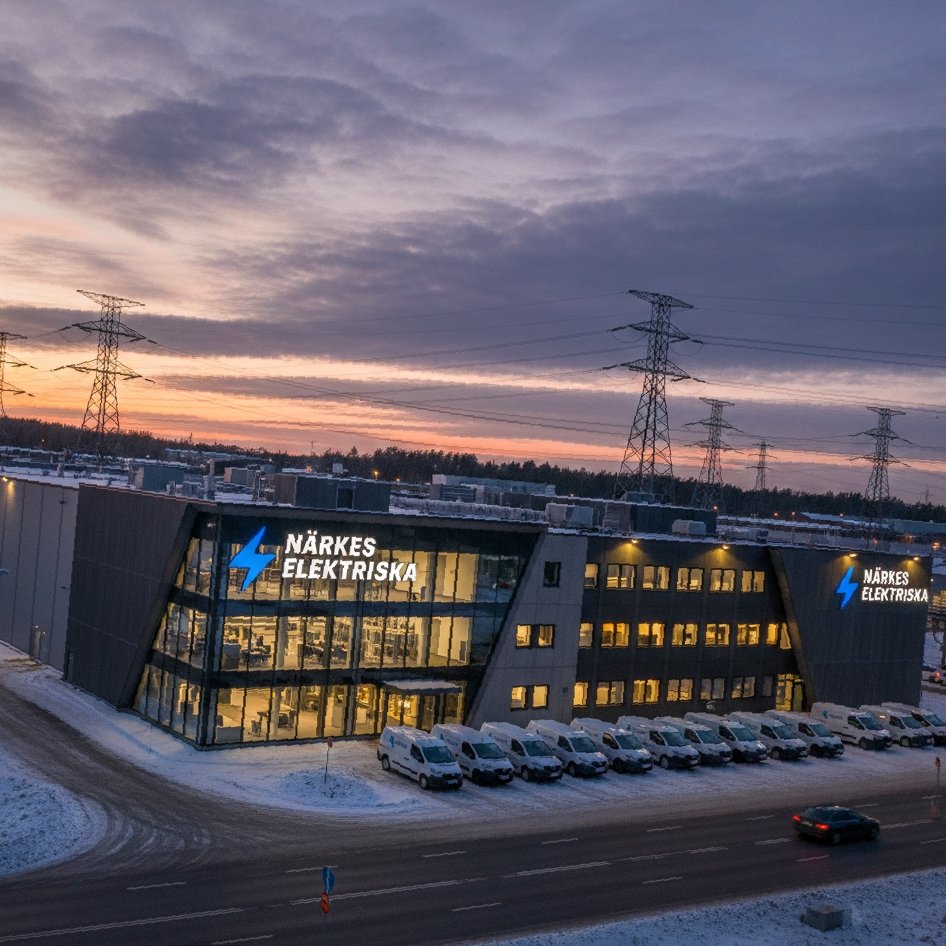
Närkes Elektriska, often shortened to NEA, is a long-established Swedish name associated with electrical contracting and related technical services with roots in Örebro and the historic region of Närke. Swedish descriptions commonly present the company as founded in 1931 in Örebro, originally connected to ASEA, and since 1949 operating as an independent company focused on areas such as electrical installation, maintenance, and sales of electrical materials, primarily serving businesses and industry.
If you are writing a company profile, building SEO content, or researching industrial contractors in central Sweden, NEA is a useful case because the brand name itself is both regional (“Närkes” → Närke/Örebro) and sector-specific (“Elektriska” → electrical work). It also sits within a broader Swedish installations market that has seen ownership changes and consolidation over time.
A quick but important note: “NEA” is not unique globally. In other contexts it can refer to unrelated organizations such as the OECD’s Nuclear Energy Agency. This article uses NEA strictly to mean Närkes Elektriska in Sweden.
1) Why the name matters: Örebro, Närke, and local industrial identity
Many Swedish technical contractors developed in strong industrial regions—places where manufacturing, construction, and public infrastructure created a steady need for electrical installations and ongoing maintenance. Örebro and the surrounding Närke area sit in the middle of Sweden’s geography and logistics networks, and local and regional contractors have historically served:
- industrial plants and workshops,
- commercial buildings and construction sites,
- municipal/public sector facilities,
- and maintenance-heavy environments where downtime is costly.
For content and marketing, that context matters because people searching for electrical services tend to fall into two intent groups:
- Brand intent: “Närkes Elektriska,” “NEA,” “NEA Örebro,” “Närkes Elektriska contact,” etc.
- Service intent: “electrical installation,” “industrial electrical maintenance,” “electrical contractor,” “electrical materials supplier,” etc.
A complete article should address both: identity + history (why the name is trusted) and services + capability (what the company is known for doing).
2) Historical timeline: key milestones that appear in public sources
1931: Founded in Örebro, linked to ASEA
Swedish descriptions state that Närkes Elektriska was founded in 1931 in Örebro and originally formed as part of ASEA.
That early ASEA connection is often cited as part of the company’s origin story and helps explain why NEA is frequently associated with technical work in industrial and large-project environments.
1949: Operates as its own company
The same Swedish source notes that from 1949 onward, NEA operated as an independent company in areas including electrical installation, maintenance, and sale of electrical materials, mainly for companies and industry.
Listed period and delisting in 2006 after acquisition
Public share-history information from Sweden’s tax authority (Skatteverket) notes the share history and indicates the company’s share was delisted in 2006, with information that the company was acquired by Segulah Alfa AB (with terms reported as “1 NEA gave 145 kr”).
Swedish business press reporting from September 11, 2006 also described a cash offer of 145 SEK per share.
2011: NEA Elmateriel sold to Ahlsell (electrical wholesaling)
Ahlsell communicated that it acquired NEA Elmateriel AB, described as an electrical wholesaler with approximately 850 MSEK turnover and locations in roughly 40 places in Sweden, primarily serving industrial customers.
Swedish radio also covered the purchase as Ahlsell buying NEA Elmateriel AB, a subsidiary within Närkes Elektriska AB.
This matters because it shows the NEA sphere has included both contracting/installation and a strong materials/wholesale component.
NEA within broader installations-market consolidation
Industry reporting has described how Imtech entered the Swedish installations market through acquisitions including NEA.
Separately, later industrial-service communications have referenced electromechanical workshops with roots in NEA’s workshop operations and long-standing presence in Swedish industrial service.
Together these sources support a simple, accurate narrative: NEA has a long industrial heritage and its footprint has intersected with the consolidation cycles typical of the Nordic technical services market.
3) What does Närkes Elektriska (NEA) do? Service areas described in sources
When writing a “complete” company article, it’s best to separate:
- Services clearly described in public sources (safe to claim), and
- Typical services of a full-service electrical contractor (use careful wording like “often includes,” “typically covers,” and avoid overstating).
Below are the service areas that appear in public descriptions.
A) Electrical installation and contracting
Swedish descriptions explicitly mention electrical installation as a core activity.
Business profiles also characterize NEA as selling and installing electrical systems and offering contracting services.
What “electrical installation” typically means in industrial/commercial contexts In practice, electrical installation for businesses and industry often covers:
- power distribution for facilities and production areas,
- installation and modification of electrical systems during expansions or renovations,
- coordination with construction contractors, mechanical contractors, and automation teams,
- commissioning and documentation of installed systems.
Even when the customer’s project is “just electrical,” the work must integrate with safety routines, mechanical layouts, operational schedules, and compliance documentation.
B) Maintenance and service
Swedish descriptions also mention maintenance (“underhåll”) as part of NEA’s activities.
Why maintenance is central for industrial customers Industrial environments depend on reliable electrical systems. Maintenance often includes:
- preventive inspections and measurements to reduce risk,
- troubleshooting and corrective work when failures occur,
- planned shutdown support during annual stops or production changes,
- upgrade work to improve reliability, capacity, or safety.
For many plants and large facilities, the cost of unplanned downtime can exceed the cost of the repair itself—so maintenance becomes a strategic function, not only an operational one.
C) Electrical materials and wholesaling (including NEA Elmateriel)
Swedish descriptions explicitly refer to sales of electrical materials.
Ahlsell’s acquisition of NEA Elmateriel AB documents an electrical wholesaling branch within the broader NEA sphere (at least historically), describing wide geographic establishment and an industrial customer base.
A business profile also describes wholesale distribution of electrical equipment.
Why the materials side matters A contractor’s ability to supply or coordinate materials can affect:
- lead times for projects,
- response time during urgent breakdowns,
- standardization across multiple facilities,
- and overall project cost control.
In many industrial settings, material availability is just as important as technician availability.
D) Electromechanical repair and industrial service (motors, generators, etc.)
A business profile states NEA repairs electrical engines/motors and generators.
A later industrial-service press release describes workshop-oriented service and sales for equipment such as electric motors, generators, transformers, and pumps, aimed at the process and manufacturing industries, and notes a lineage from NEA workshop operations.
Why electromechanical capability is valuable For industrial customers, motors and generators are production-critical assets. The decision to repair vs replace can depend on:
- load patterns and operating hours,
- thermal stress and failure history,
- mechanical wear (bearings, shafts),
- spare part availability,
- and how quickly the asset must be returned to service.
This area of work sits at the intersection of electrical and mechanical engineering and is often a differentiator for industrial service providers.
E) Escalator installation (as described in a business profile)
A business profile also states NEA has had a department for escalator installation.
This is an example of specialized building/infrastructure installation work sometimes associated with larger technical service groups.
4) Typical customer segments associated with NEA
Public descriptions suggest NEA markets to industrial and construction companies and the public sector in Sweden, and Swedish sources emphasize orientation toward companies and industry.
These customer categories generally require:
- strong safety routines and documentation,
- project coordination and predictable delivery,
- long-term service agreements and maintenance planning,
- and procurement readiness (especially in public sector work).
5) Safety and legality in Sweden: a must-have section in any electrical company article
Electrical work is not only technical—it is safety-critical. In Sweden, the regulatory framework emphasizes that most electrical installation work must be performed by a registered electrical installation company, and unauthorized electrical installation work can be a criminal offense.
Elsäkerhetsverket (the Swedish Electrical Safety Authority) describes requirements such as:
- companies performing electrical installation work on someone else’s installation must be registered,
- companies should have an internal self-check program (egenkontrollprogram),
- and there should be an installer responsible for compliance (elinstallatör för regelefterlevnad).
For buyers and facility owners, the practical advice is straightforward: use the public service “Kolla elföretaget” to verify a company’s registration status.
Including this in your article improves credibility, aligns with customer concerns, and supports informational search intent.
6) Avoiding acronym confusion: “NEA” is not always Närkes Elektriska
Because “NEA” is used internationally by other organizations, it’s helpful to include a short clarifier in English content:
- If you mean Närkes Elektriska, write “NEA (Närkes Elektriska)” early in the article and in headings.
- If you see users bouncing, add one line noting that NEA can also refer to the OECD Nuclear Energy Agency in other contexts.
This reduces confusion and improves time-on-page, especially for global readers.
7) How a modern buyer might use a contractor with an NEA-type profile
Based on how NEA is described—installation, maintenance, materials, and industrial service—there are several common customer scenarios where this type of capability is particularly relevant.
Scenario 1: Industrial plant focused on reducing downtime
A plant may prioritize:
- preventive maintenance planning for critical electrical systems,
- fast troubleshooting capability when failures occur,
- and service/repair access for motors, generators, transformers, or pumps.
In these environments, reliability improvements often pay for themselves quickly through reduced production interruptions.
Scenario 2: Construction or refurbishment of commercial buildings
Building projects typically require:
- clear scope boundaries among trades,
- predictable delivery timelines,
- coordination with other contractors,
- and proper commissioning and handover documentation.
Even relatively “standard” electrical installations become complex when multiple trades overlap and the building must remain partially operational.
Scenario 3: Public sector procurement and framework agreements
Public sector work frequently emphasizes:
- compliance and registration verification,
- traceability in execution and documentation,
- and structured service delivery.
For this audience, including compliance language (registration, self-check program, responsible installer) is particularly valuable because it reflects the buyer’s evaluation criteria.
8) FAQ (English, SEO-friendly)
When was Närkes Elektriska founded?
Swedish descriptions state it was founded in 1931 in Örebro.
When did it become an independent company?
Sources describe it operating as its own company since 1949.
Was the company listed, and what happened in 2006?
Skatteverket’s share history indicates the share was delisted in 2006 and provides information about an acquisition by Segulah Alfa AB; business reporting described an offer of 145 SEK per share.
What was NEA Elmateriel?
Ahlsell described NEA Elmateriel AB as an electrical wholesaler with broad Swedish presence and industrial customers, acquired by Ahlsell in 2011.
How can I verify an electrical company is allowed to perform installation work in Sweden?
Use Elsäkerhetsverket’s service “Kolla elföretaget” to check registration.
Is “NEA” always Närkes Elektriska?
No—“NEA” can also refer to other organizations, including the OECD Nuclear Energy Agency.
Conclusion
Närkes Elektriska (NEA) is commonly described as an Örebro-rooted Swedish electrical name with a long history—founded in 1931, operating independently since 1949, and associated with electrical installation, maintenance, and electrical materials, primarily for companies and industry.
Over time, public sources also document major milestones such as the 2006 acquisition/delisting and the 2011 sale of NEA Elmateriel to Ahlsell, which highlights how the NEA sphere has included both contracting work and a substantial electrical materials/wholesale component.
Finally, any discussion of electrical services in Sweden should acknowledge the safety and legal framework: most electrical installation work must be performed by registered companies, and customers can verify registration using “Kolla elföretaget.”
