

Table of contents
- The quick answer: Who is the Nuggets coach?
- Why “Nuggets coach” became a huge search topic
- The end of the Michael Malone era: why it hit so hard
- David Adelman’s background: the long road to head coach
- How Adelman won the job: the interim stretch that became the test
- Nuggets coaching staff: who’s on Adelman’s bench
- What kind of coach is David Adelman?
- Coaching a Jokic team: why Denver is different
- What changes (and what stays) after a major coaching shift
- The biggest strategic questions for the Adelman era
- What success looks like in Year 1 (and beyond)
- FAQ about the Nuggets coach
- Final take: why the Adelman era matters
1) The quick answer: Who is the Nuggets coach?
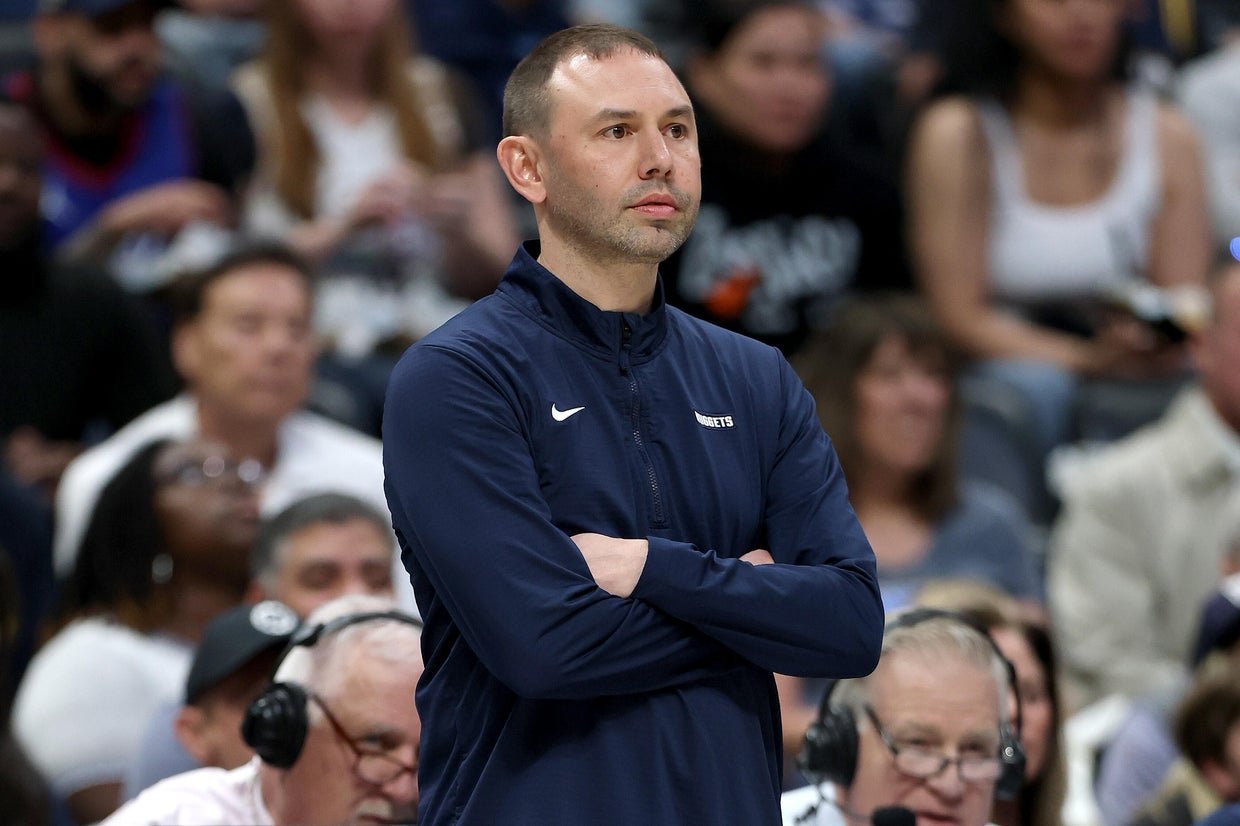
The Denver Nuggets head coach is David Adelman.
That’s the straightforward answer most fans want when they type “Nuggets coach” into Google. But in Denver, the coaching story is never just a name. The Nuggets are a championship organization in the prime years of Nikola Jokic—meaning every change at the top carries massive expectations, intense scrutiny, and a simple standard: contend for titles.
David Adelman is not a random hire or a short-term placeholder. He stepped in under enormous pressure, earned the trust of the roster, and then took over the role permanently. Now he’s the face of Denver’s next phase—charged with keeping the team’s identity sharp while pushing it forward in a Western Conference where “good” is never good enough.
2) Why “Nuggets coach” became a huge search topic
Sometimes a search trend is driven by a highlight or a rumor. In Denver’s case, it was driven by a shockwave.
When a franchise changes coaches late in the season—especially a team that expects to compete deep into the playoffs—it instantly becomes a national conversation. Fans search the coach’s name, the timeline, the reasons, and the ripple effects. That’s exactly what happened with the Nuggets.
It’s one thing for a rebuilding team to change direction. It’s another for a team built around a generational superstar, with a recent championship banner, to switch leadership abruptly.
The core reasons the “Nuggets coach” query exploded:
- A dramatic coaching change close to the postseason.
- A new face leading a championship-caliber roster.
- A league-wide obsession with what it means for Jokic and Denver’s title window.
- A staff shuffle that signaled the team wasn’t just changing voices—it was changing structure.
Once the dust settled, the question evolved from “Who is the Nuggets coach?” to “What kind of coach is he—and what happens next?”
3) The end of the Michael Malone era: why it hit so hard
To understand the Adelman era, you have to understand what came before it—and why it mattered.
Michael Malone wasn’t just “the previous coach.” For many fans, he was the coach who guided Denver through its modern transformation: from promising roster to consistent contender to champion.
He became associated with the Nuggets’ identity:
- tough-minded competitiveness,
- defensive accountability,
- and a culture that believed in continuity.
That’s why the change felt seismic. It wasn’t a typical coaching shuffle. It was the end of a long chapter in a franchise story that had finally reached the mountaintop in 2023.
Why the timing felt unbelievable
A late-season coaching change is rare in the NBA. A late-season coaching change for a team expecting a deep playoff run is even rarer. It instantly creates questions:
- What went wrong behind the scenes?
- Did the organization feel the team had stagnated?
- Was the locker room losing its edge?
- Was the move about tactics—or about leadership?
Even without every internal detail being public, the message was clear: Denver believed the current trajectory wasn’t meeting the standard required to maximize a championship run.
The human side: a coach tied to an era
For years, Malone and Jokic were linked. Jokic’s rise happened under Malone’s watch. Fans who had followed Denver through roster changes, playoff heartbreak, and eventual triumph naturally saw Malone as part of the foundation.
So when the Nuggets moved on, it wasn’t just a strategy move. It was emotional for the fan base—because it symbolized how ruthless the NBA can be when championship expectations become the baseline.
And that ruthlessness is exactly the environment David Adelman inherited.
4) David Adelman’s background: the long road to head coach
A lot of NBA head coaches have a similar origin story: playing career, assistant path, then a break. Adelman’s path is slightly different—and in some ways, more modern.
A basketball family with real coaching DNA
David Adelman is the son of Rick Adelman, a long-time NBA head coach. That doesn’t mean David automatically gets credibility—NBA locker rooms don’t operate on family reputation. But it does mean he grew up around:
- how coaches communicate,
- how teams prepare,
- how staff members divide responsibilities,
- and how pressure changes everything in the playoffs.
When coaches talk about “learning the job” early, this is what they mean: the sport becomes your environment, and coaching becomes the language you understand naturally.
Player development roots
Adelman’s early NBA work included player development. That matters more than it sounds.
Player development coaches live in the details:
- footwork,
- shooting rhythm,
- film habits,
- confidence,
- and the long grind of turning “almost” into “reliable.”
That background often shapes a head coach’s style in a few ways:
- more emphasis on communication,
- more patience with growth,
- and more willingness to invest in role players instead of focusing only on stars.
For a Nuggets team that constantly needs bench contributions around Jokic, that perspective can be invaluable.
A steady climb through assistant roles
Adelman’s resume includes assistant coaching stops before landing in Denver’s staff in 2017. That length of time matters. It means he wasn’t a one-year wonder. He was in the building for years—watching Denver’s scheme evolve, seeing what Jokic needs, building relationships, and learning how the Nuggets function internally.
By the time he became head coach, he wasn’t “new.” He was familiar. He understood the roster, the culture, and the organization’s expectations.
Known as an offensive mind
Adelman has been widely viewed as a key part of Denver’s offensive approach. That’s important because the Nuggets’ offense isn’t a generic system. It’s built around Jokic’s rare ability to score, pass, and read defenses like a point guard in a center’s body.
If Denver wanted to protect what makes it special while still shifting leadership, appointing an internal offensive architect is a logical way to keep continuity while changing the voice at the top.
5) How Adelman won the job: the interim stretch that became the test
In the NBA, very few auditions are harder than this:
- take over with almost no runway,
- lead a contender immediately,
- and prove you can manage playoff pressure.
That was Adelman’s reality.
The challenge of “same roster, different leader”
When an assistant becomes the head coach midstream, the roster doesn’t suddenly become different. The personalities, habits, and expectations are already set. But the tone changes:
- how practices run,
- how film sessions feel,
- how accountability is communicated,
- and how players interpret the stakes.
Adelman had to find a balance quickly:
- keep the locker room calm enough to function,
- but urgent enough to sharpen its edge.
Earning player trust
One of the biggest indicators of Adelman’s success during the transition was that the roster reportedly supported him strongly. That matters because the NBA is a player-driven league, and a new head coach can’t survive without buy-in from the group—especially when the team has stars and champions.
Support doesn’t always mean everyone agrees with every choice. It means players feel:
- respected,
- clearly led,
- and confident in the plan.
The Nuggets didn’t just need a tactician. They needed a stabilizer who could also push.
What the interim run revealed
Even if the season ended short of the ultimate goal, the interim stretch told Denver something critical: the team could operate under Adelman’s leadership without collapsing under pressure.
That’s the line that matters most. Plenty of interim coaches look good for two weeks and then lose the room. Adelman’s elevation suggested the organization believed he could handle the role permanently, not temporarily.
6) Nuggets coaching staff: who’s on Adelman’s bench
No NBA head coach wins alone. The staff is the engine room: scouting, film, development, opponent prep, practice plans, adjustments.
Denver’s coaching staff includes multiple assistants and development coaches, and it features recognizable names to many fans.
The headline staff addition: Jared Dudley
Jared Dudley joined Denver’s staff as an assistant coach under Adelman. That move matters for two reasons:
- Recent player credibility. Dudley played in the modern NBA and understands current locker room dynamics.
- Bench leadership. Teams often rely on a top assistant as a sounding board and tactical partner, especially during playoff series.
When a new head coach adds a respected former player with a coaching background, it can signal an emphasis on communication, relationships, and practical on-court problem solving.
Other assistants and staff structure
The Nuggets’ staff includes assistant coaches such as:
- J.J. Barea
- Mike Moser
- Chase Buford
- Rodney Billups
- Ognjen Stojakovic
- John Beckett
- Elvis Valcarcel
…and others in player development and video roles.
What fans should understand: a staff like this usually means specialization. One coach may focus more on defense, another on offense sets, another on player development, another on game management and scouting.
A head coach’s most important staff skill is delegation—knowing who handles what, and how to unify those voices into one clear message for the players.
If Adelman is strong at building a collaborative staff environment, Denver benefits in the moments that decide games:
- halftime adjustments,
- late-game play calls,
- and series-to-series tactical shifts.
7) What kind of coach is David Adelman?
Fans always want the label: “defensive coach,” “players coach,” “offensive genius.” Real coaching identities are more complex. But there are clues that help you understand Adelman’s likely approach.
A steadier emotional profile
Adelman has spoken publicly about staying emotionally level—an idea tied to lessons from his father and the reality that NBA seasons are long. That’s not just a nice quote. It’s a leadership style.
A coach who stays even can help:
- reduce panic during losing streaks,
- keep players focused on execution,
- and avoid emotional swings that disrupt preparation.
Denver doesn’t need emotional fireworks. It needs consistent sharpness.
A strong offensive foundation
The Nuggets’ offense is built around Jokic decision-making and constant movement—cuts, screens, spacing, and read-based action. An “offense-first” head coach in Denver doesn’t mean ignoring defense. It means protecting the team’s superpower.
That makes sense in the Jokic era because:
- offense is what makes Denver unique,
- and playoff success often comes from having a half-court attack that doesn’t break under pressure.
Adelman’s best path is likely to keep Denver’s offensive identity intact while improving defensive consistency and late-game execution.
Direct communication when needed
In high-level sports, honesty matters. A coach who can call out a bad performance clearly—without turning it into personal attacks—usually earns more respect than one who hides behind vague clichés.
The best version of directness looks like this:
- “We weren’t good enough,”
- “Here’s why,”
- “Here’s what changes tomorrow.”
That’s the kind of tone strong teams respond to.
8) Coaching a Jokic team: why Denver is different
If you’ve ever wondered why Denver’s coaching job feels uniquely specific, it’s because Nikola Jokic is uniquely specific.
Jokic isn’t just a scorer. He’s the system.
He’s a center who:
- sees the floor like an elite point guard,
- manipulates defenses with passing angles,
- and turns ordinary movement into easy points.
So the Nuggets coach has a different set of responsibilities compared with many teams.
The coach’s job is to build an ecosystem for Jokic
It’s not about designing a system to “feature” him in an obvious way. Jokic already features himself. The job is to create conditions where:
- teammates stay active,
- spacing remains clean,
- and everyone knows where the advantages come from.
That typically means:
- structured freedom,
- clear spacing rules,
- and a culture that values cutting and unselfish play.
The second job: keep everyone else engaged
A Jokic offense can drift into “watch Jokic do magic” if the team loses discipline. Great Nuggets basketball looks like:
- players cutting on time,
- screeners re-screening,
- shooters relocating,
- and Jokic making the defense pay for every mistake.
That requires coaching—constant reminders, film accountability, and role clarity.
The third job: solve playoff counters
In the playoffs, opponents load up on tendencies. They try to:
- disrupt timing,
- take away favorite actions,
- and force role players to make uncomfortable decisions.
A great Nuggets coach prepares the roster with counters:
- alternate entry points,
- quick-hitting actions,
- and lineup combinations that keep the defense guessing.
This is where staff quality and in-series adjustments become everything.
9) What changes (and what stays) after a major coaching shift
A coaching change doesn’t automatically change a roster’s identity. But it can change priorities.
What likely stays
The offensive identity built around Jokic.
Denver’s spacing, movement, and Jokic-centric decision-making aren’t going anywhere. They’re the franchise advantage.
The championship expectation.
This isn’t a developmental rebuild. The standard is deep playoff runs.
What can change quickly
Rotation patterns.
A new coach often changes how minutes are distributed and which bench players get trust. That can reshape the season.
Practice emphasis.
Even minor changes—like dedicating more time to transition defense or late-game sets—can have huge cumulative effects.
Game management style.
Timeout usage, challenges, late-game play calls, and how the team handles momentum swings—all can look different under a new head coach.
Communication tone.
Sometimes that’s the biggest change. Players can respond dramatically to a new voice even if the playbook looks similar.
10) The biggest strategic questions for the Adelman era
If you’re thinking like a fan—or like a front office—these are the questions that matter most.
1) Can Denver defend at a title level consistently?
The NBA is full of elite offenses. Championships often go to the teams that can get stops in the biggest moments.
Denver doesn’t need to be the best defense in the league. But it needs to be:
- connected,
- disciplined,
- and resilient against elite perimeter creation.
That’s usually a combination of scheme and effort—meaning coaching can influence it significantly.
2) Can the Nuggets generate reliable scoring when opponents overplay Jokic actions?
In the playoffs, teams will try to:
- deny the easy Jokic reads,
- pressure the handoffs,
- and force Denver into tougher late-clock situations.
The question isn’t whether Jokic will still produce—he will. The question is whether Denver’s secondary scoring and role-player execution stays consistent enough to win four rounds.
3) How does Adelman handle the bench and development?
The regular season is partly about seeding and partly about building playable depth.
If Adelman’s player development background translates into real bench growth, it can pay off when:
- injuries hit,
- matchups shift,
- or a playoff series demands a different look.
4) What does “urgency” look like without panic?
Teams that feel pressure can become tight. The Nuggets coach must walk a fine line:
- demand excellence,
- but keep the team loose enough to play free-flowing basketball.
That’s especially true with Jokic, whose greatness often looks effortless. Tightness can ruin rhythm-based offenses.
11) What success looks like in Year 1 (and beyond)
It’s tempting to define success as “title or bust.” That’s the standard Denver is chasing—but it’s also not the only meaningful way to evaluate a coach, especially early.
Here’s a realistic success checklist for David Adelman:
A) Maintain an elite offense
Denver’s offense should remain one of the league’s most reliable half-court systems. That means:
- strong spacing habits,
- purposeful cutting,
- and clean late-game execution.
B) Improve defensive consistency
Not necessarily a radical scheme overhaul—sometimes it’s simply:
- better communication,
- clearer rules,
- stronger transition effort,
- and better lineup combinations.
C) Build trust with the bench
Championship runs are often decided by the 7th, 8th, and 9th men:
- can they survive defensively?
- can they hit open shots?
- can they avoid mistakes under pressure?
A coach who develops playable depth increases Denver’s margin for error.
D) Keep the locker room united
This is underrated. A contending season includes:
- injuries,
- slumps,
- frustration about minutes,
- external noise,
- and playoff pressure.
A coach who keeps alignment—who keeps the group pulling in the same direction—gives Denver the best chance to peak at the right time.
E) Win the tactical moments
The NBA margins are thin:
- an ATO (after-timeout) play that gets an easy basket,
- a defensive tweak that stops a run,
- or a lineup adjustment that flips a matchup.
Great coaching shows up in these little pivots.
12) FAQ about the Nuggets coach
Who is the current Denver Nuggets coach?
David Adelman is the Nuggets head coach.
Was David Adelman an assistant coach before becoming head coach?
Yes. He spent years on Denver’s staff before being elevated to the head coaching role.
Why did Denver change coaches?
The Nuggets made a leadership change late in the season with championship expectations in mind. While every internal detail isn’t public, the move signaled urgency and a belief that a new direction was needed to maximize the team’s postseason potential.
Who are notable assistants on the Nuggets staff?
The Nuggets staff includes multiple assistants, including Jared Dudley, along with other assistants and development staff such as J.J. Barea and others.
What is David Adelman known for as a coach?
He’s widely regarded as an important part of Denver’s offensive approach, and his leadership style has emphasized steadiness and clear communication.
What does this mean for Nikola Jokic?
In practical terms, it likely means Denver continues to build around Jokic as the offensive hub while looking for improvements in defensive consistency, depth, and playoff adaptability.
13) Final take: why the Adelman era matters
The “Nuggets coach” search isn’t just a trivia question anymore. It’s a symbol of where Denver is as a franchise.
This is a team in the prime of a generational superstar, living under the reality that:
- the window is open now,
- the West is brutal,
- and every postseason is a high-stakes evaluation.
David Adelman steps into that reality with two major advantages:
- he already knows the organization and the roster,
- and he has a strong foundation in the system that makes Denver special.
But he also faces the hardest part of the job:
- meeting championship expectations without the cushion of a long grace period.
If Adelman can keep Denver’s offense elite, raise the floor defensively, develop trustworthy depth, and manage playoff adjustments with calm clarity, the Nuggets can remain exactly where they believe they belong—at the center of the title conversation.
