

Rayne Kruger, born Charles Rayne Kruger on January 29, 1922, in Queenstown, Eastern Cape Province, South Africa, led a remarkable life. His journey spanned multiple professions, continents, and fields, making him a true Renaissance man of the 20th century. From his humble beginnings in apartheid-era South Africa to his success as a writer, historian, businessman, and philanthropist in the United Kingdom, Kruger’s story is one of resilience, curiosity, and bold reinvention. This article explores Kruger’s life, career, literary works, personal experiences, and the lasting impact of his achievements.
Early Life and Education
Rayne Kruger’s early years shaped his future in unexpected ways. He was born to a 17-year-old mother, the daughter of a British Army officer. His biological father left before Kruger’s birth, and his mother remarried a Johannesburg estate agent, Victor Kruger, whose surname Rayne took. This shift in his family dynamic set the stage for Kruger’s unique outlook on life.
Growing up in Johannesburg, Kruger attended Jeppe High School before enrolling at the University of the Witwatersrand. However, his studies were cut short after a prank involving a donkey derby led to his expulsion. Instead of giving up, Kruger pursued a practical path and became an articled clerk at a law firm. He laid the foundation for his legal career, but his interests soon took him in a different direction, combining a love for storytelling with a keen interest in intellectual pursuits.
The Early Career: From Mines to the Merchant Navy
Before fully committing to his legal studies, Kruger worked in Johannesburg’s gold mines. This experience exposed him to the tough realities of manual labor and shaped his views on class and social issues. Later, when World War II broke out, Kruger tried to enlist in the military, but poor eyesight prevented him from joining the frontline. Undeterred, he joined the British Merchant Navy as a steward aboard an oil tanker. His time in the Merchant Navy allowed him to travel across the world and exposed him to a variety of cultures and ideas that would inform his future work. After the war, Kruger returned to South Africa and completed his law studies, but he quickly realized that his true passion lay in the arts and history.
Entering the Arts: Theatre and Broadcasting
Once back in South Africa, Kruger immersed himself in the world of amateur theatre. He joined a company led by actress Nan Munro, with whom he developed a shared passion for the stage. In 1946, Kruger played Professor Henry Higgins in a touring production of Pygmalion opposite Munro as Eliza Doolittle. His success in this role sparked his deeper interest in theatre and storytelling.
In 1947, Kruger moved to England with Munro and her three children. They married shortly after settling in London, where Kruger’s career took a new turn. He began working as a newsreader for the BBC World Service, where he honed his skills in journalism and storytelling. This exposure to global events and world history became a major influence on his later writing. Alongside his broadcasting work, Kruger also began writing plays, one of which was The Green Box, a piece inspired by the life of Dr. James Barry, a 19th-century military surgeon who was later revealed to be a woman. This marked the beginning of Kruger’s shift from theatre to writing.
Literary Career: From Fiction to History
Kruger’s early literary works were novels and crime fiction, often based on his life experiences. His first novel, Tanker (1952), was semi-autobiographical, recounting his time in the Merchant Navy. This work was followed by The Spectacle (1953) and Young Villain With Wings (1953), both of which focused on crime and moral dilemmas. These early works displayed Kruger’s growing interest in the complexities of human nature and societal expectations.
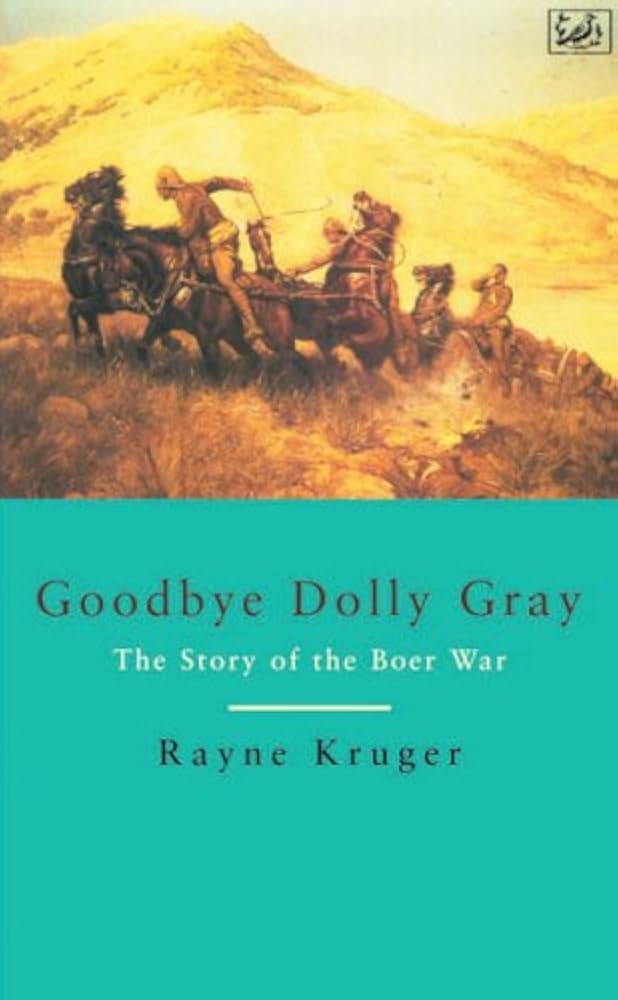
However, Kruger’s true breakthrough came when he shifted his focus to historical writing. In 1959, he published Goodbye Dolly Gray: The Story of the Boer War, which provided a sweeping, accessible account of the Second Boer War. The book received praise for its ability to blend rigorous historical research with engaging narrative, making it one of the best single-volume accounts of the war. It remains a significant contribution to the study of South African history.
Following the success of Goodbye Dolly Gray, Kruger expanded his scope to other historical topics. In 1964, he published The Devil’s Discus: The Death of Ananda, King of Siam, which explored the mysterious death of the Thai king. Kruger delved into potential assassination and political intrigue, which led the Thai government to ban the book. Despite this, the work gained international attention, reinforcing Kruger’s reputation as a fearless historian.
Later in life, Kruger became fascinated with Chinese history, which resulted in his most ambitious project: All Under Heaven: A Complete History of China. This book, published posthumously in 2003, reflects his dedication to providing accessible historical narratives to a broad audience. His work on China brought the complexities of its culture, history, and mythology to life for general readers.
Transition to Business: Media and Property Development
In the 1960s, Kruger began shifting his focus from writing to business. Recognizing the opportunities in the media world, Kruger co-founded the Orpington News Shopper in the mid-1960s, one of the first free-distribution newspapers in the UK. The newspaper, which relied on advertising revenue, marked a turning point in how local news was delivered to the public. This innovation in media distribution would later become widespread across the UK.
Kruger also ventured into property development, co-founding Sohox Partners, a company that developed residential and office buildings in central London, including neighborhoods like Soho and Regent’s Park. Through these ventures, Kruger helped shape parts of London’s urban landscape while demonstrating his business acumen and entrepreneurial spirit.
Personal Life: Marriages and Family
Kruger’s personal life reflected his dynamic career. In 1947, he married Nan Munro, with whom he shared a love for theatre and the arts. They had three children from Munro’s previous marriage. However, the marriage ended in divorce in 1974. That same year, Kruger married Prue Leith, a restaurateur and television personality. Their relationship began earlier, in the early 1960s, when Kruger was still married to Munro.
Kruger and Leith had one biological child, Danny Kruger, born in 1974. Danny went on to become a Member of Parliament for the Conservative Party and later joined Reform UK. Additionally, Kruger and Leith adopted a daughter, Li-Da Kruger, an orphan from Cambodia who was evacuated during the Khmer Rouge regime. This adoption demonstrated Kruger’s commitment to international humanitarian causes.
Death and Legacy
Rayne Kruger passed away on December 21, 2002, at the age of 80. His death marked the end of an extraordinary life, one that had spanned several continents, professions, and disciplines. Kruger’s legacy endures, particularly through his literary contributions. His works on the Boer War, the death of King Ananda Mahidol, and Chinese history have had a lasting impact on historical writing, particularly in how history can be made accessible to the general public.
Kruger’s influence extended beyond his writing. His contributions to the media and property development sectors helped shape the landscape of both industries in the UK. Through his business ventures and support of Leith’s culinary enterprises, Kruger also left a mark on the hospitality industry.
Conclusion: A Life Well Lived
Rayne Kruger’s life is a testament to the power of reinvention and intellectual curiosity. He seamlessly moved between professions, from writing and broadcasting to business and property development. His historical works continue to resonate with readers, and his legacy lives on through his family, whose members have followed in his footsteps in politics, business, and the arts.
Kruger’s ability to combine storytelling with intellectual rigor made him a remarkable figure. His career shows that success is not defined by specialization but by the ability to adapt, explore new opportunities, and leave a lasting impact on the world. Rayne Kruger’s life is an enduring example of versatility, courage, and intellectual achievement.
